What Is 3D Exhibition Stall Design?
3D exhibition stall design is the planning of a trade show stand as a three-dimensional space, first as a digital model and then as a built environment with depth and interactive elements. The term covers two connected stages:
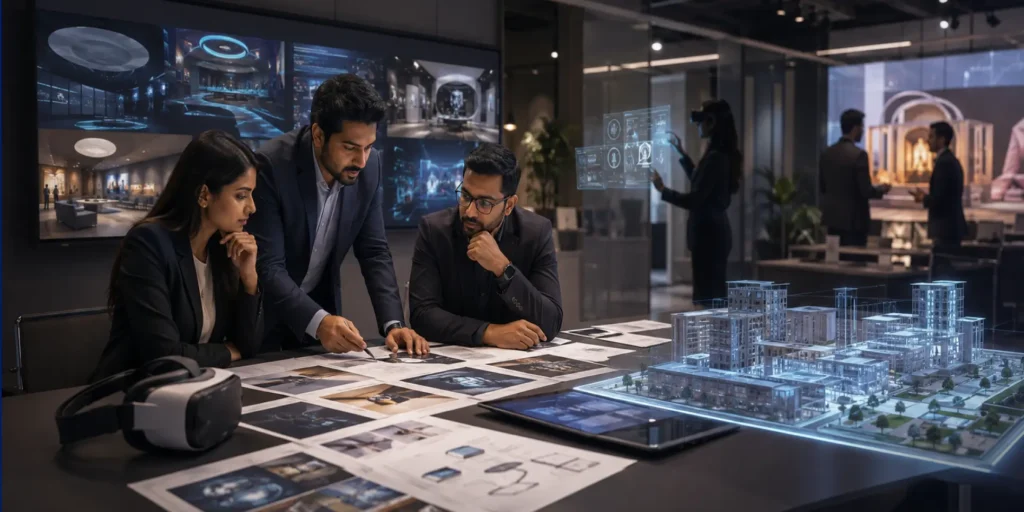
- The 3D model: a to-scale digital render that confirms structure, lighting, graphics, and visitor flow before material is cut.
- The 3D experience: the built stand itself, with height, depth, and hands-on elements a flat graphic wall cannot offer.
Buyers also search for 3D stall design and 3D booth design. Booth and stand are common at international fairs, stall in regional markets, and every point below applies to all of them.
The Three-Second Test Every Stand Faces
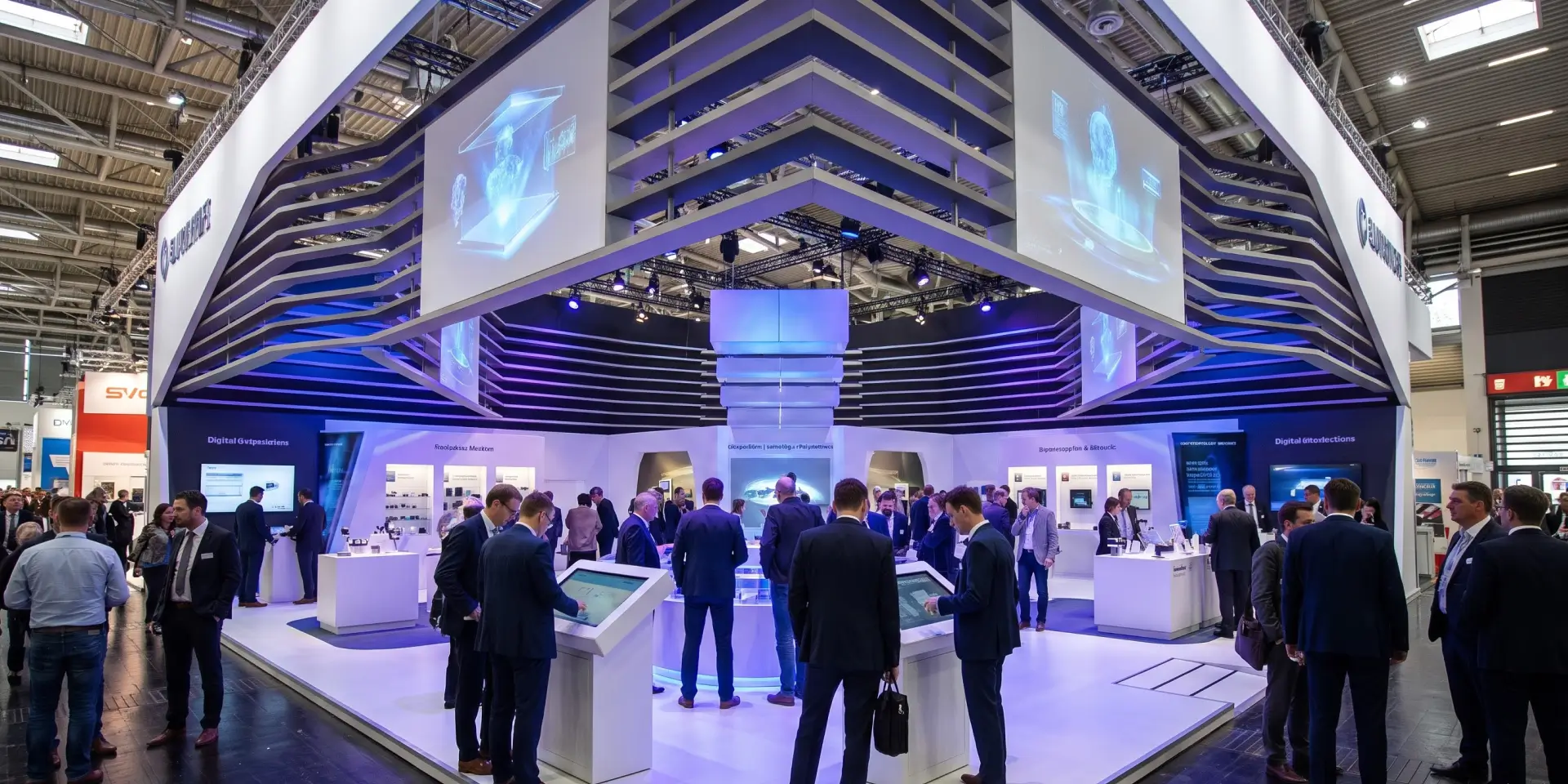
A visitor gives each stand a few seconds before deciding to stop or keep walking. That decision happens from the aisle, at an angle, in a crowded hall. This is where a 3D exhibition stall design wins:
- Visibility beyond your aisle: height and depth stay readable from thirty metres, while a flat wall disappears once a viewer moves off centre.
- A crowd draws a crowd: an installation people can touch forms a small group, and that group pulls in the next one.
- Time creates conversations: each extra minute inside the stand is another chance for your team to open a qualified conversation.
Attendee research supports this. Freeman found that 61 percent of attendees define an immersive experience as hands-on product interaction. We agree with the warning inside that finding. Spectacle without substance collects photos, and hands-on interaction collects leads. A 3D stall design should always place the product, or a working version of it, within reach.
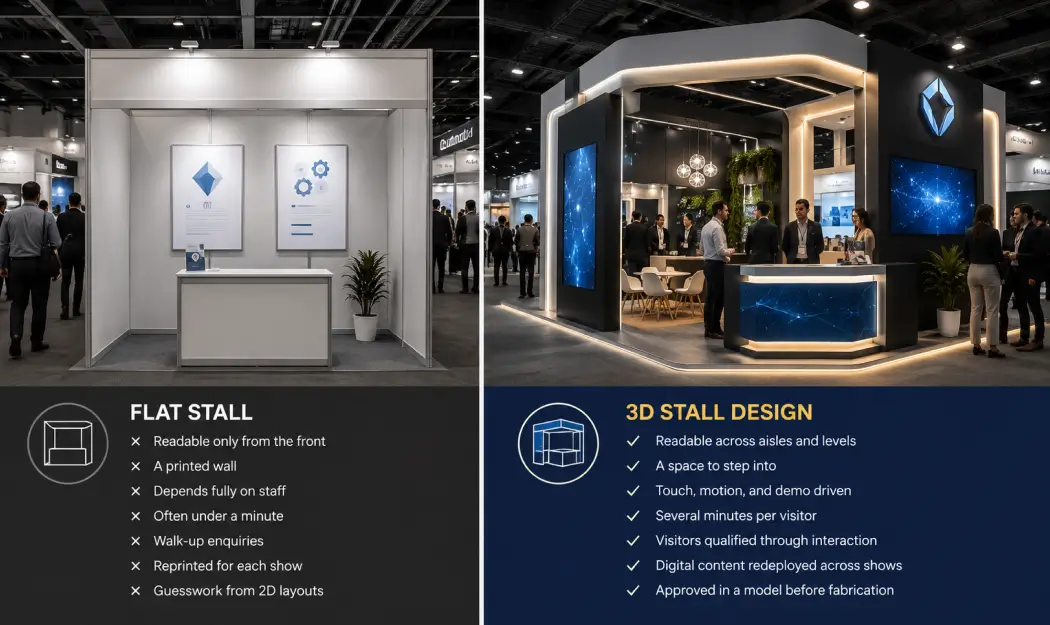
3D Stall Design vs Flat Stall: The Difference in Numbers
This table compares a flat, graphics-only stall with a three-dimensional build. The same comparison holds for 3D booth design at larger international shows.
| Factor | Flat stall | 3D exhibition stall design |
| Visibility | Readable only from the front | Readable across aisles and levels |
| First impression | A printed wall | A space to step into |
| Engagement | Depends fully on staff | Touch, motion, and demo driven |
| Dwell time | Often under a minute | Several minutes per visitor |
| Lead quality | Walk-up enquiries | Visitors qualified through interaction |
| Content reuse | Reprinted for each show | Digital content redeployed across shows |
| Pre-build certainty | Guesswork from 2D layouts | Approved in a model before fabrication |
The pattern holds across our projects: a flat stall relies on staff to stop people, while a 3D build stops them on its own and frees staff for conversations.
The Interactive Layer That Turns Walkers into Visitors
Structure makes a visitor slow down. Interaction makes them stay. CEIR research shows attendees rank interacting with new products and getting questions answered on the spot among their top reasons for attending. An interactive exhibition stand serves both needs at once. Three of our builds show how this plays out.
A Hologram That Created a Queue
For a global consultancy, we built the PwC HoloSelfie experience. Employees recorded a short clip at a photobooth and watched their own hologram appear on stage. People waited in line to try it. A queue is booth traffic made visible, and the format transfers to any expo floor.
A Bottle That Told Its Own Story
For a luxury spirits brand, we built a sensor-driven installation where lifting a bottle played its film in 4K. Guests picked up the product on their own, the exact behaviour a sales team wants to begin from. The same sensor logic fits any 3D booth design with a physical product to show.
A Screen the Whole Crowd Could Join
For a biotech company, we created a digital tree plantation experience where every guest planted a tree from their phone and watched a forest grow on a giant LED wall. Participation kept the area busy for the full event. An interactive exhibition stand built on this model turns passers-by into participants within seconds.
How 3D Booth Design Protects the Budget Before the Build
The digital model matters on the balance sheet as much as on the floor. It is the shared agreement between marketing, design, and fabrication. Here is what it prevents:
- Surprises at the venue: column positions, machine footprints, and cable runs are resolved in the model, and the install follows a checked plan.
- Costly late changes: a revision in a 3D stall design takes hours on screen, while the same change on site costs materials, labour, and show days.
- Stakeholder disagreement: one shared model gives every decision maker the same picture and shortens approvals.
We treat the model as a deliverable. It is often the stage where a 3D exhibition stall design earns back its fee before the show opens.
Booth Traffic You Can Count, Not Guess
Most exhibitors report footfall as an estimate. A stand should report it as data. The interactive exhibition stands and pavilions we deliver include measurement as a standard layer:
- Dwell time: how long visitors stay in each zone of the stand.
- Interaction counts: how many people used each demo, screen, or configurator.
- Attention analytics: which areas drew crowds and which were passed over.
A CMO can then show which parts of the stand produced conversations and plan the next 3D stall design around proof instead of memory.
The Same Rules Work in Malls, Airports, and Museums
Booth traffic follows the same logic as footfall in any public venue. Experience leads at malls and airports face the same three-second test as any exhibitor. The aisle is longer and the audience broader, and the answer is identical. We built a holographic digital twin of an airport terminal that anchored a public unveiling and let visitors explore the masterplan in phases.
The economics carry over. Digital content produced for one show can move into a permanent brand showroom or a seasonal venue activation. A 3D exhibition stall design keeps working after the hall closes. In our projects, this reuse often separates a one-week cost from a two-year asset.
Planning an Interactive Exhibition Stand for Your Next Show?
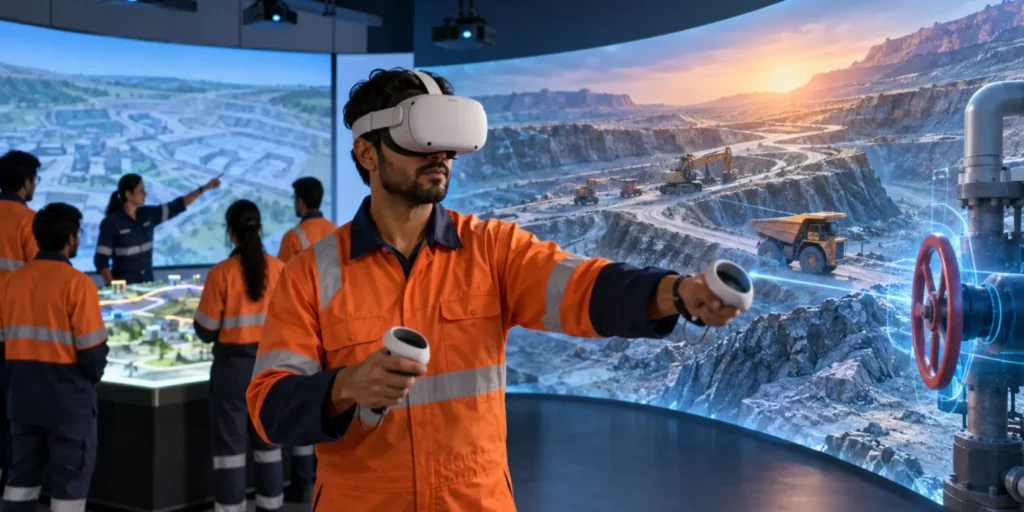
We design and build the interactive layer described above: holographic stages, sensor installations, projection-mapped rooms, and participation screens, with measurement included. For a property developer, our holographic table experience let buyers explore an unbuilt project on a surface they could touch, before construction reached that stage.
If you have show dates and a stand size, share your brief with us. We respond within 24 hours with a straight view of what will pull traffic in your space, and a 3D exhibition stall design concept with a clear quote follows from there.
The Bottom Line
Flat stands ask visitors to read. Three-dimensional stands ask them to take part, and taking part is what produces booth traffic. Start with the model, build the interactive layer around your product, and measure what happens. That is the full case for 3D exhibition stall design, and it has held at every show we have worked on.
FAQs
What is 3D exhibition stall design?
3D exhibition stall design is the planning of a trade show stand as a digital 3D model and as a built three-dimensional space. The model confirms structure, lighting, and flow before fabrication, and the finished stand uses depth and interaction to attract visitors.
Is 3D booth design different from 3D stall design?
No. 3D booth design and 3D stall design describe the same work. Booth and stand appear at international fairs, stall in regional markets, and the process is identical.
How do you make an exhibition stall attractive?
Use one message readable from a distance, keep the entry open, and give visitors one thing to do with their hands. A working demo or a holographic display outperforms extra graphics because interaction is what makes people stop.
Does an interactive exhibition stand cost more than a flat stall?
The build cost is higher and the cost per conversation is usually lower. Interactive elements raise dwell time and lead quality, and the digital content can be reused across shows, which spreads the investment.
How long does a 3D exhibition stall design take?
A first 3D model usually takes days once the brief and stand size are fixed. Fabrication timelines depend on the venue, so approve the model well before the show calendar tightens.