Stall, Booth, or Stand? The Words Mean the Same Thing
Buyers use three words for the same thing. Exhibition stall design, exhibition booth design, and exhibition stand design all describe planning and building a branded space at a show. “Stall” is common in local markets. “Booth” and “stand” appear more at international fairs. The principles behind them do not change with the label.
So every rule in this guide about exhibition stall design applies equally to exhibition booth design and exhibition stand design. If your team exhibits abroad, the floor plan may say booth or stand, but the brief you prepare stays the same.
Why Exhibition Stall Design Decides Your Footfall
A visitor decides whether to enter a stand within a few seconds, often from several metres away. That decision is visual and quick. Exhibition stall design controls the signals behind it:
- Sightlines: Can people read your brand and your offer from down the aisle?
- Openness: Is it easy to step in, or does the layout feel closed off?
- Focus: Is there one clear reason to stop, or a wall of competing messages?
- Flow: Once inside, does the path lead to a conversation?
Trade fairs are still one of the most direct ways to meet buyers in person, which is part of why the global exhibition industry stays large and active. The stands that win attention are designed around the visitor first, and we treat these four signals as the base of every project.
The Exhibition Stall Design Process, Step by Step
Every strong stand follows a clear process. We use six steps, and skipping any of them shows on the floor.
- Brief: Fix the goal first: leads, launches, meetings, or awareness. The goal shapes every later choice.
- Concept: Agree the story and the single message before any drawing starts.
- 3D design: Turn the concept into a 3D model, so you can judge scale, sightlines, and flow before you spend on the build.
- Fabrication: Build the structure, graphics, and fittings.
- Install and dismantle: Set up on time, run the show, and remove cleanly.
- Review: Measure the result against the goal you set in step one.
This order matters. We plan events, expos, and brand activations around the goal, so the design earns footfall instead of filling space. A stand built before the story is agreed almost always costs more and works less.
Types of Exhibition Stalls, and How to Choose
Exhibition stall design starts with choosing the right footprint. Stalls are grouped by how many sides open onto the aisle. More open sides usually mean more footfall and a higher cost. Here is a quick comparison.
| Stall type | Open sides | Best for | Footfall potential |
| One side open (linear) | 1 | Small budgets, first-time exhibitors | Lower |
| Two side open (corner) | 2 | Better visibility at a modest cost | Medium |
| Three side open (peninsula) | 3 | Established brands wanting reach | High |
| Four side open (island) | 4 | Flagship presence and major launches | Highest |
Beyond the footprint, you choose a build type. Modular stands use reusable frames and suit teams that exhibit often. Custom stands are built for one show and give full control of the look. Portable systems work for small spaces and fast setups. The same holds for exhibition booth design at larger international venues, where island layouts and custom builds are common.
Materials and Stall Fabrication, Made Simple
Materials are central to exhibition stall design. Stall fabrication usually combines a few common choices:
- Plywood and MDF: Flexible and cost-effective for custom builds.
- Aluminium systems: Light, reusable, and quick to assemble.
- Laminates and fabric graphics: For clean, large-format branding.
- Acrylic and metal: For premium finishes and product displays.
Good stall fabrication also plans for weight, transport, and venue safety rules. We treat stall fabrication as an engineering task, not just carpentry, so the stand looks right and passes inspection. Cutting corners on stall fabrication is the fastest way to a stand that looks cheap under show lighting.
The Technology That Pulls a Crowd
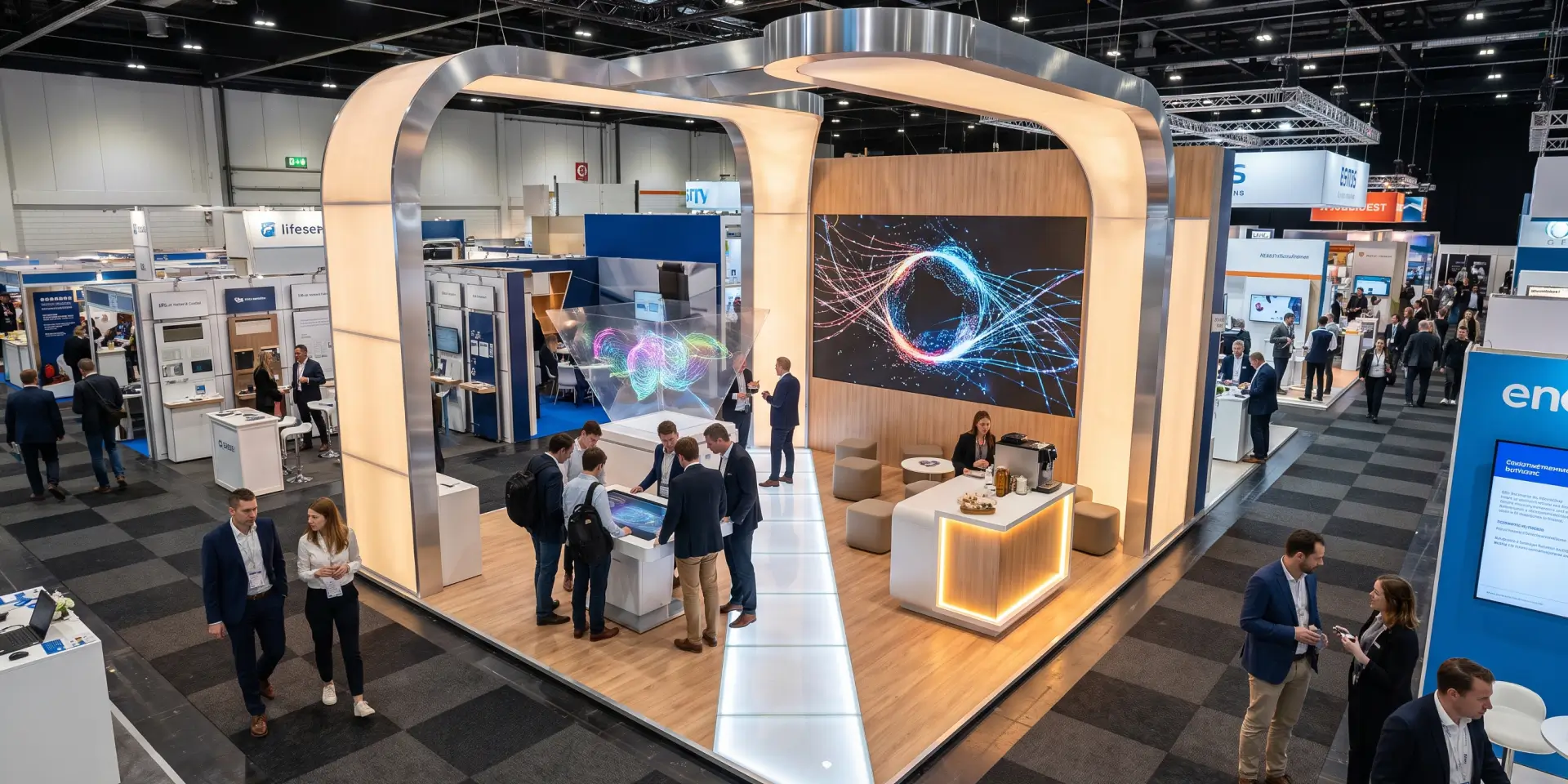
Technology is the part of exhibition stall design that has changed the most. Screens and lights are common now, so they no longer surprise anyone. What pulls a crowd today is something a visitor can take part in.
- Interactive touch tables and product configurators people can explore on their own.
- LED walls and projection that make the stand visible from across the hall.
- 3D and immersive content that explains a complex product in seconds.
- Holographic displays that gather a crowd with no headset.
We created a holographic heritage experience for a G20 summit that turned a walk-through space into the most photographed spot in the venue. The draw was the content, not the hardware.
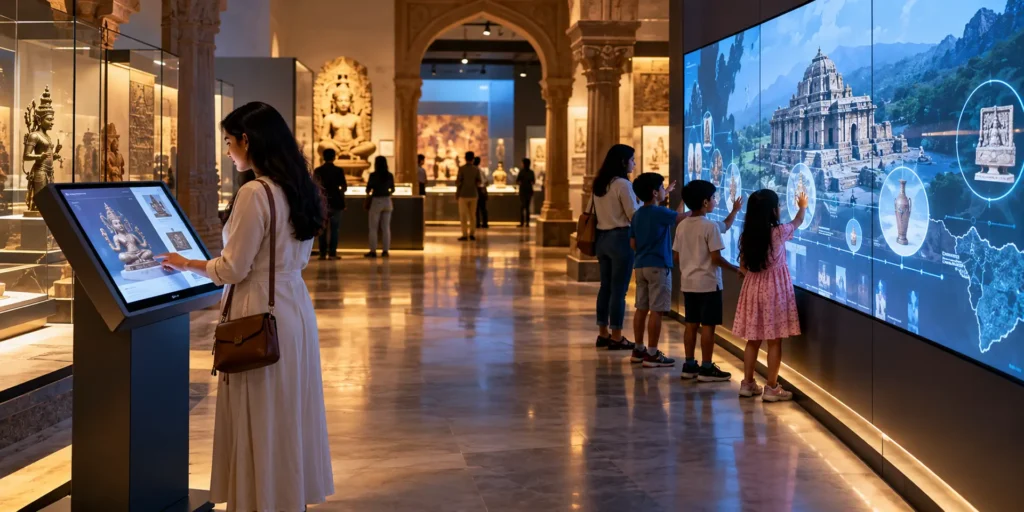
For a major museum, we built interactive digital experiences that let visitors handle history on a screen. The same method works on a show floor. Modern exhibition stand design uses technology to earn attention, then gives people a reason to stay and talk.
What an Exhibition Stand Costs, and How to Budget
The cost of exhibition stall design depends on a few variables: size, the number of open sides, materials, and technology. Rather than chase a single price, plan the budget in parts. Exhibition stand design budgets split into a few clear parts:
- Space rental, paid to the organiser by the square metre.
- Design and 3D visualisation.
- Fabrication and graphics.
- Technology and content.
- Logistics, install, power, and dismantling.
A useful rule is to set the goal and the target number of quality leads first, then build the budget to reach it. A cheaper stand that no one enters is the most expensive option of all. We help teams put money where it changes footfall, and cut it where visitors will never notice.
Design Ideas That Lift Footfall
The best exhibition stall design ideas share a few traits:
- One bold headline that states what you do, placed high enough to read from a distance.
- Open corners and a low or clear entrance, so stepping in feels easy.
- A single hero product or live demo as the focal point.
- Clear wayfinding inside the stand, so visitors know where to look and where to go next.
- Seating or a small refreshment point that gives buyers a reason to stay.
Interaction is the strongest draw of all. Exhibition booth design at big shows now leans heavily on it. For one exhibition, we built an interactive storytelling exhibit that held visitors far longer than a standard display. On a show floor, extra minutes of dwell time are extra chances to start a sales conversation.
Beyond the Show
The best stands do not end when the show closes. The interactive content you build for a fair can move into a permanent brand showroom or experience centre, so the investment keeps working all year. We design both, which lets the stand and the showroom share one visual language.
Planning a Stand for Your Next Show?
Strong exhibition stall design starts with the goal and ends with a measurable result. That is how we work. We have built holographic, interactive, and immersive experiences for high-profile events and cultural spaces, and each one was designed to hold attention and prove its value.
If you are planning a stand for an upcoming fair and want it to earn footfall, tell us about your show and your goals. We will give you a straight view of what will work for your space and budget.
The Bottom Line
Exhibition stall design is a planning discipline, not decoration. Set the goal, choose the right stall type, match the materials, and add technology that gives visitors a reason to stop. Whether the floor plan calls it a stall, a booth, or a stand, the brands that design around the visitor are the ones that leave the show with a full pipeline.
Frequently Asked Questions
What is exhibition stall design?
Exhibition stall design is the planning and building of a branded space at a trade fair or expo. It covers layout, materials, graphics, and technology, with the goal of attracting footfall and generating leads.
Is exhibition booth design different from stall design?
No. Exhibition booth design and exhibition stall design describe the same work. “Booth” and “stand” are simply the more common words at international shows, while “stall” is used in local markets.
How much does an exhibition stand cost?
Costs vary with size, open sides, materials, technology, and fabrication. Set your lead goal first, then budget across space rental, design, stall fabrication, technology, and logistics to reach it.
What makes a stall attract more footfall?
Clear sightlines, an open entrance, one strong message, interactive technology, and good wayfinding. Exhibition stand design that puts the visitor first will always pull a bigger crowd than a stand built around the logo.