What a Product Launch Event Is Supposed to Do
A product launch event is a live gathering that introduces a new product to a chosen audience and moves it toward a measurable action: a pre-order, a demo booking, a review or a dealer commitment.
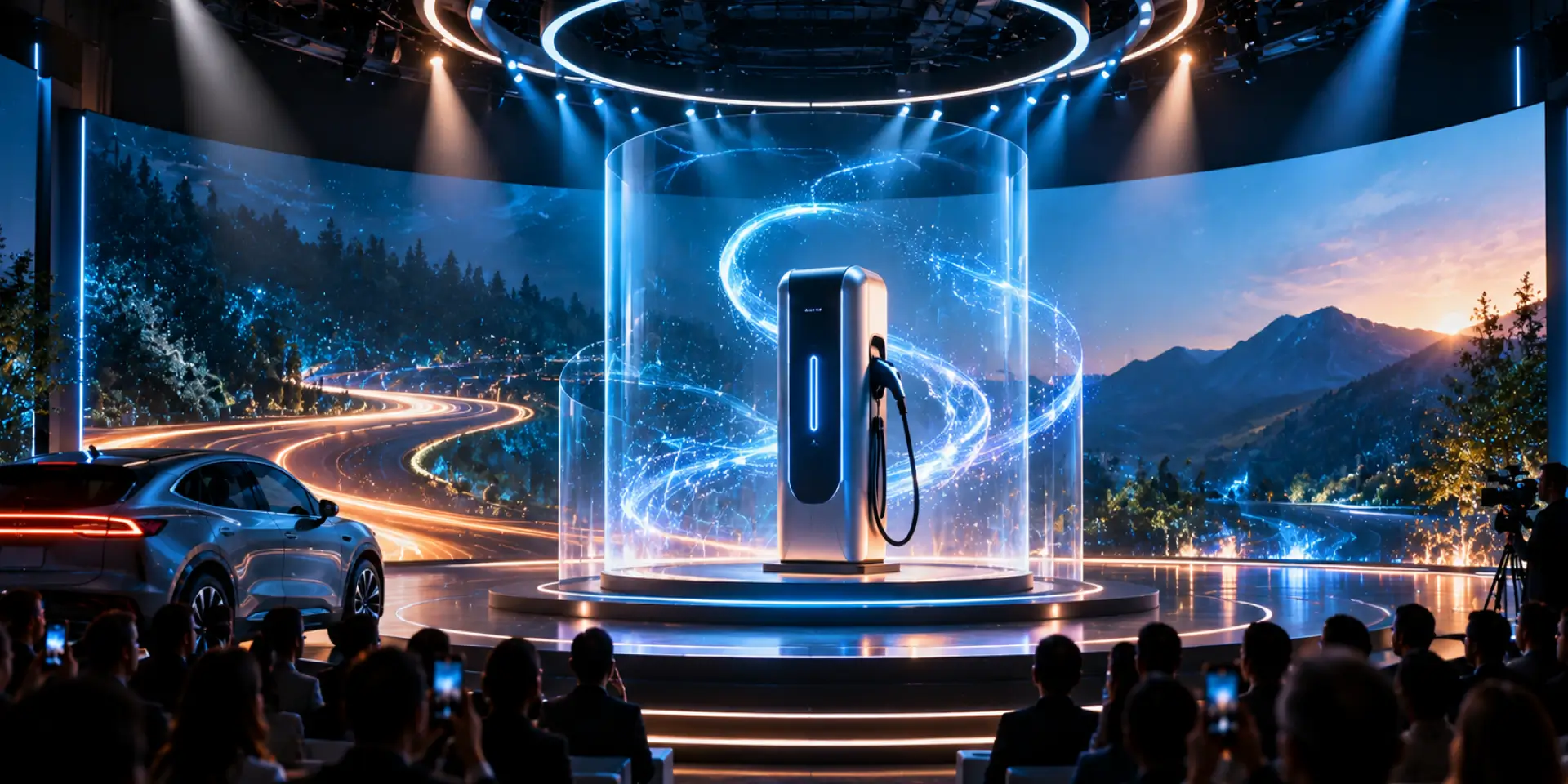
An immersive product launch event changes how that job gets done. Guests trigger the story, operate the product or watch a room respond to them. It is a brand activation with a release date attached, so the rules from our guide to brand activation apply.
Why the Keynote-and-Curtain Format Fails the Audience
Freeman’s 2025 Experience Trends Report surveyed more than 2,600 attendees and organisers. 78% of organisers believed they had delivered a memorable peak moment; 40% of attendees said they had one. 61% of attendees defined an immersive experience as hands-on interaction with a product.
That gap is the case for an immersive launch event experience: a guest who does something looks at the product for minutes and leaves a logged interaction that a keynote cannot produce. Our event and brand activation work is built on those two effects.
How to Plan an Immersive Product Launch Event in Seven Steps
Step 1. Fix One Number Before You Pick a Format
Write one sentence: “This product launch event succeeds if ___.” Fill the blank with a figure: 200 qualified demos, 50 dealer sign-ups or 30 press pickups within 72 hours. Format, venue, guest list and display technology follow from that figure. A launch without a number gets judged on the catering.
Step 2. Read the Venue Before You Design Anything
Public spaces set the rules of a product launch event, so we walk every venue first. A mall atrium gives a shopper 30 to 90 seconds; an airport terminal gives a seated passenger twenty minutes and a low tolerance for noise. The events, expos and public spaces we build for each need a different launch event experience and budget. Our site visit records:
- Dwell window: how long a person will stop, which sets the length of the reveal
- Sightlines, light and power: projection fails under a skylight, and rigging and floor loading are confirmed in writing
- Permissions: sound levels, crowd flow, fire access and unstaffed hours, approved by the operator
Step 3. Design the Immersive Product Reveal as One Gesture
The reveal is the launch event experience. We design it in three parts:
- Trigger: one action a guest completes in under ten seconds, such as lifting, scanning or tapping
- Payoff: a visible change at room scale, such as a film, a hologram or a lighting state
- Capture: a record of the interaction, and the guest’s contact where relevant, logged as it happens
For a luxury spirits brand, lifting a bottle from a pickup sensor played its origin film in 4K on the LED wall behind it. The sensor-driven bottle installation recorded more interactions than guests. That is our test for any immersive product reveal: if a guest needs instructions, the mechanic is wrong.
Step 4. Choose the Display for the Reveal You Designed
Each format suits a different product launch event and fails in a predictable way.
| Format | Suits | Watch for |
| Holographic display | Large, unbuilt or off-site products | Small viewing radius; dark surround |
| Projection mapping | Product silhouettes, launch rooms, facades | Ambient light and throw distance |
| LED wall with live content | Reveals that react to guests; busy atria | Pixel map and content lead time |
| Phone-triggered interaction | Crowd participation and contact capture | Venue Wi-Fi and QR placement |
Pick the display the venue can support and the guest can operate. A 3D hologram holds a crowd in a controlled space and is not visible under a skylight. An immersive product reveal built on the wrong display is the most common expensive mistake we are asked to fix.
Step 5. Start the Motion Graphics Before the Guest List
Content is the part launch teams start last and need first. A keynote deck takes a week. Motion graphics for an LED wall or a holographic reveal take six to ten weeks: script, storyboard, 3D build, sound and a render at the screen’s exact pixel map. We treat motion graphics as event production, and our guide to motion graphics services covers the briefing detail. Two rules keep content on schedule:
- Pixel map first: get the resolution and aspect ratio of every screen before motion graphics work begins
- One motion language: fix how the logo enters and how scenes transition, so stage, wall and social clips match
Step 6. Rehearse Three Times and Plan for the Reveal to Fail
The reveal at a product launch event happens once. We run three full rehearsals on the venue hardware and network:
- Wired network: a live reveal never runs on venue Wi-Fi
- Named backup operator: one person whose only job is the fallback, with a rendered reveal cued on a second machine
- Separate circuits: the display and the trigger system never share a power line
For a national airport authority we unveiled a holographic digital twin of a new terminal at its foundation-stone ceremony, with live data feeds. There was no second date, and it ran because the rehearsal schedule was written before the model was.
Step 7. Measure the Experience, Then Keep the Build
Attendance, press pickups and pipeline are the standard product launch event metrics. Add the numbers only the experience can produce:
- Dwell time: minutes a guest spends inside the reveal zone
- Interaction rate: share of guests who complete the trigger action
- Cost per interaction: total build cost divided by logged interactions
A launch build should outlive the launch. For a museum opening we replaced the lamp-lighting ceremony with a phone-triggered version across six LED screens, and every guest lit a virtual diya from their seat. The virtual lamp-lighting installation stayed on the museum floor and has passed 15k+ lit diyas. Budget the reveal as an asset.
Product Launch Ideas That Work in Malls, Airports and Expo Halls
Generic product launch ideas fail in specific venues. These are product launch event formats we have built:
- Mall atrium, gesture-reactive wall: a wall that changes as shoppers pass, with the immersive product reveal triggered when someone stops for three seconds
- Airport terminal, unstaffed holographic showcase: a holographic product display that runs around the clock, with a QR code that captures interest
- Expo hall, timed reveal: a projection-mapped reveal every 30 minutes backed by demo stations; the 3D exhibition stall design decides whether the aisle can see it
A crowd-built reveal is the format we recommend when product launch ideas have to fit a limited budget. The digital forest we built for a corporate gathering needed one QR code and one vertical LED wall, and every guest planted a named tree. Each of these product launch ideas passes one test: a guest acts, the room changes, the system records it.
What Our Launch Work Shows
Every step above comes from projects our team designed, engineered and ran. ViitorX has delivered more than 100 immersive projects with a 92% client satisfaction rate. The bottle reveal logged an interaction rate above 100%, and the airport twin ran live data at the ceremony itself. Our brand activation portfolio shows each build with its brief, mechanic and result.
If a product launch event sits on your calendar, share the brief with our team. We reply within 24 hours with format options, an indicative budget range and the metrics we would attach to each, plus our launch checklist.
The Reveal Is the First Demo
A product launch event is the first time the market handles your product, so the reveal is the first demo. Fix the number, read the venue, design the immersive product reveal as one gesture, start the motion graphics early, rehearse three times and measure the interaction. A launch event experience built that way does the explaining the keynote used to do.
FAQs
What is a product launch event?
A product launch event is a live, dated gathering that introduces a new product to a chosen audience and moves it toward a measurable action such as a pre-order or a demo booking.
What are the seven steps of a product launch event?
Fix one success number, study the venue, design the immersive product reveal as one gesture, choose the display, produce the motion graphics early, rehearse with a fallback, and measure dwell time and interaction rate.
How long does an immersive product launch event take to plan?
Twelve to sixteen weeks with custom 3D content or a holographic reveal; eight weeks for a phone-triggered reveal on an existing LED wall.
How much does an immersive product launch event cost?
Format, venue, display technology and content length set the price, and the cost drivers match those in our breakdown of experience centre cost.