Technology Choices and Their Budget Impact
Use this order of magnitude to pressure-test vendor proposals:
| Installation | Budget Impact |
| Interactive touchscreen kiosk | Moderate |
| Large-format touch wall | High |
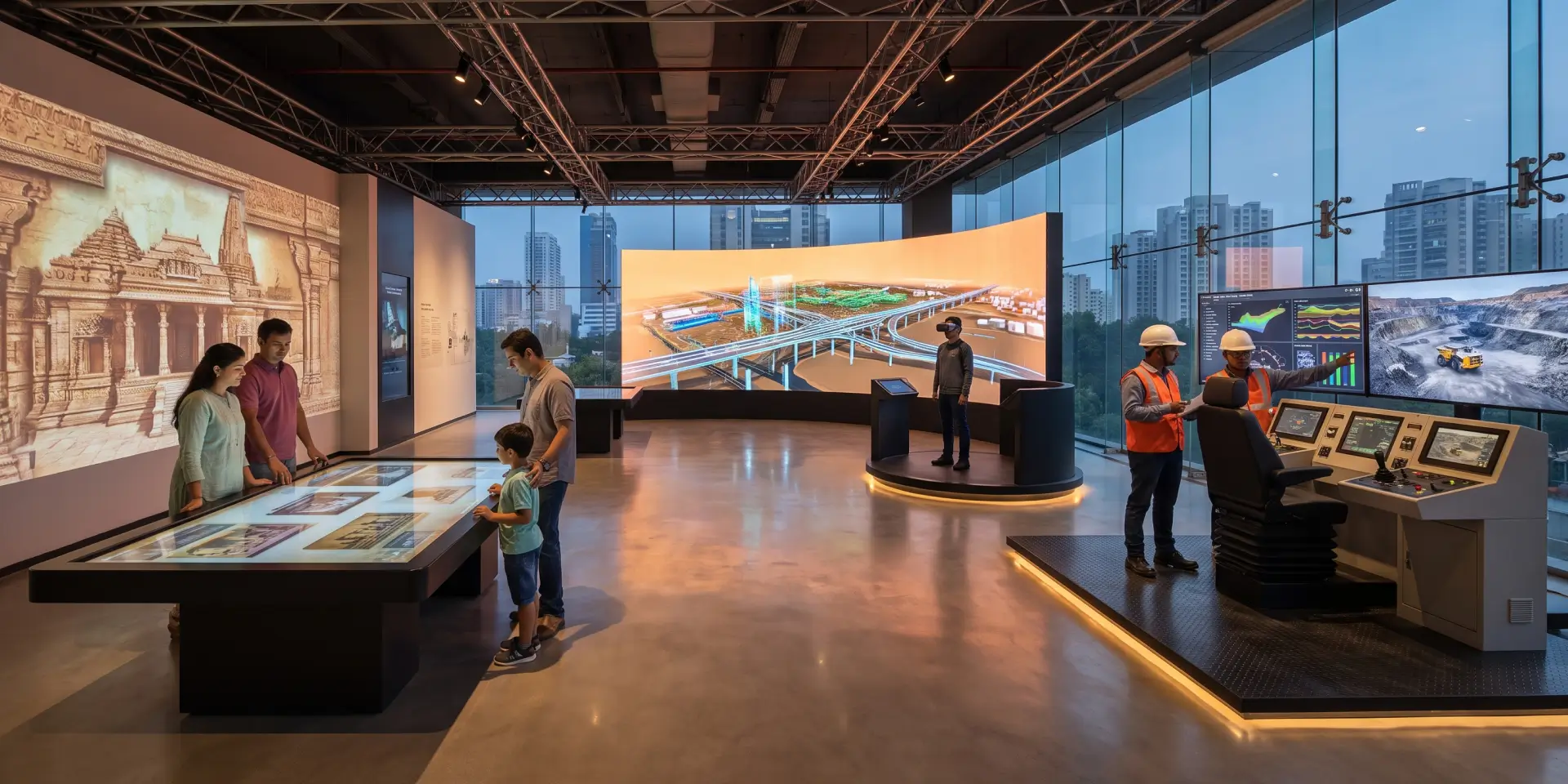
| Projection-mapped immersive room | High to very high; scales with surfaces and content minutes |
| VR station with demo module | High; content development drives spend |
| Holotable or holographic display | Very high, even in a compact room |
| Custom 3D content | Priced per finished minute; rises with runtime |
Content: The Line Item Everyone Underestimates
Hardware appears in every quote. Content is where budgets slip. Content is priced per finished minute and per application, and a mid-scale centre typically needs 15 to 30 finished minutes of custom material. Our immersive experience centre services bundle content production with installation because split vendors add coordination cost and rework.
The Bills That Arrive After Opening Day
The cost to build experience centre facilities covers the capital side. Operations continue. Plan 8 to 15 percent of the build cost every year for:
- Annual maintenance contracts for projectors, screens and sensors
- Content refresh cycles: quarterly for dynamic zones, yearly for the core narrative
- Software licences, CMS hosting and analytics subscriptions
- A trained facilitator or centre manager for guided visits
One-time hidden items catch teams too: structural reinforcement for heavy installations, dedicated cooling and earthing for AV racks, and acoustic treatment. We include these in every estimate; retrofits cost roughly double. These recurring lines belong in the true experience center cost from day one.
How to Lower the Cost to Build Experience Centre Projects
Six methods reduce experience centre pricing without reducing impact.
- Phase the build: Open with the core journey and pre-wire zones for VR or holographic additions later.
- Standardise hardware: Three screen sizes across the centre reduce procurement and spare-part costs.
- Design modular content: Templated scenes accept new data and products without fresh production cycles.
- Reuse event assets: Exhibits built for an immersive showroom or expo stand can move into permanent zones with durability upgrades.
- Appoint one accountable partner: Design, build and content under a single contract removes stacked vendor margins of 10 to 20 percent.
- Freeze scope before fabrication: Change requests after production start are the largest single source of overruns.
What the Spend Returns
A cost conversation without a return conversation fails in the boardroom. EventTrack 2026 from Event Marketer reports that 61 percent of consumers are more inclined to purchase after an event experience and 85 percent of B2B attendees leave feeling more educated about the brand. A permanent centre produces that effect on demand rather than a few days a year.
Experience centre pricing should therefore sit beside pipeline metrics: visitor-to-opportunity conversion, sales cycle length and win rate on centre-touched accounts. Our guide on the ROI of a corporate brand experience centre covers the full measurement framework.
How We Scope These Budgets at ViitorX
ViitorX has delivered more than 100 immersive projects over 10+ years, and every engagement starts with a component-level estimate rather than a concept deck. Three projects show how scope shapes budget:
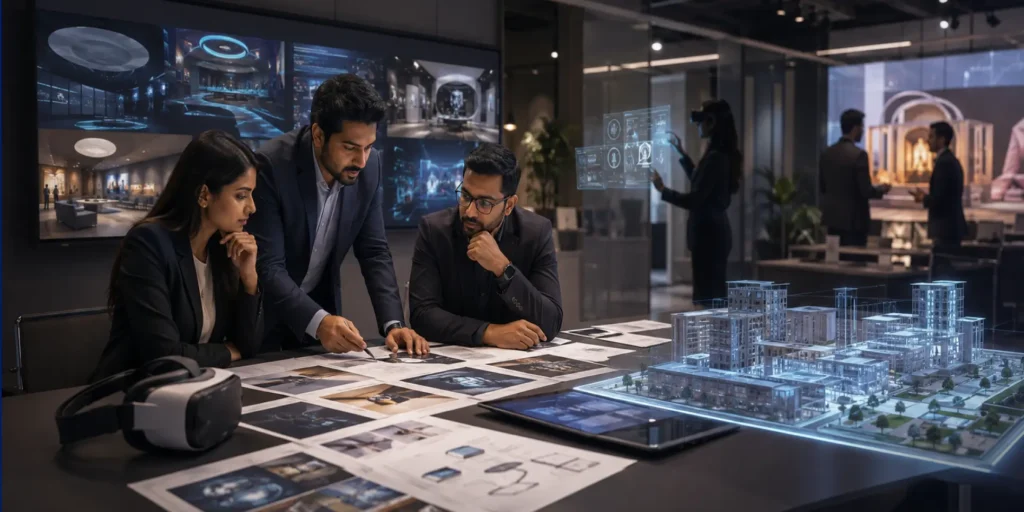
- The holographic digital twin for Noida International Airport let senior stakeholders review a complete masterplan in a single session, a flagship-tier technology deployment.
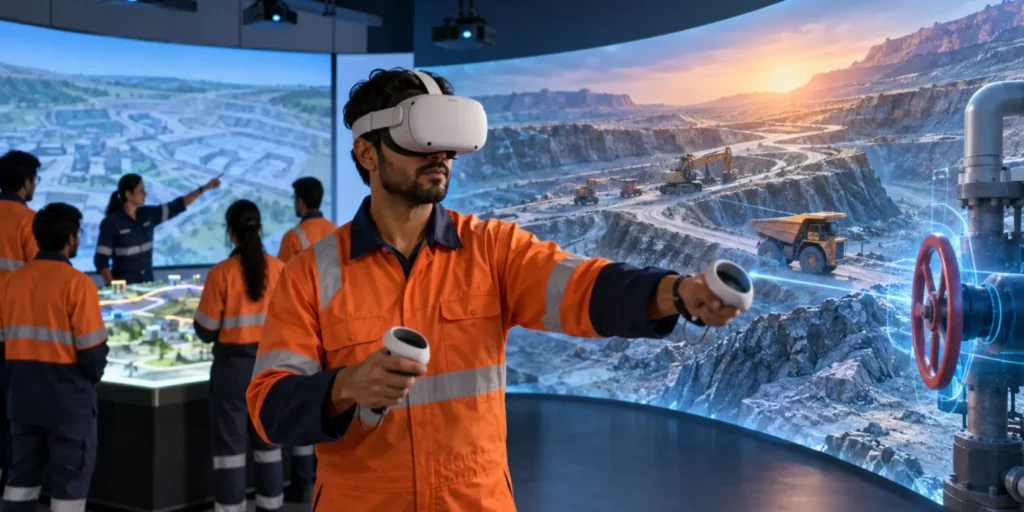
- The Adani Centre of Excellence pairs photorealistic mining simulations with interactive learning zones, a mid-scale enterprise build.
- The Varanasi Ropeway VR experience shows how one high-impact installation communicates an unbuilt project, a compact-tier scope.
Each estimate maps your brief to a tier, lists every component with its budget share, and states the annual operating reserve. Finance teams can interrogate it line by line.
Conclusion
Experience centre cost becomes clear the moment scope is defined. Seven pricing factors, a component-level budget split and an annual operating reserve of 8 to 15 percent give you the structure. The missing input is your brief.
Schedule a meeting with our team and bring your floor plan, audience and objectives. We reply within 24 hours with a scoped, component-level estimate your board can act on.
FAQs
How much does a corporate experience centre cost?
There is no fixed figure. Experience centre cost is set by technology density, content volume and customisation, not floor area alone. Two centres of identical size can differ by three times. A scoped estimate takes one meeting.
Is there a standard experience center cost per square foot?
No. Per square foot maths misleads in this category. A holotable in a small room can exceed the budget of a large hall with standard screens. Price the components instead.
How long does construction take?
Eight to fourteen weeks for a compact brand zone, four to seven months for a mid-scale centre, and up to twelve months for a flagship build.
What does experience centre pricing usually miss?
Content production, annual maintenance of 8 to 15 percent of capex, software licences, and structural or electrical upgrades to the base building.
Can the cost to build experience centre projects be phased?
Yes. Open with the core visitor journey and pre-wire future zones. Phasing spreads capital across financial years without redesign.