What Is AR in Museums? A Plain Definition First
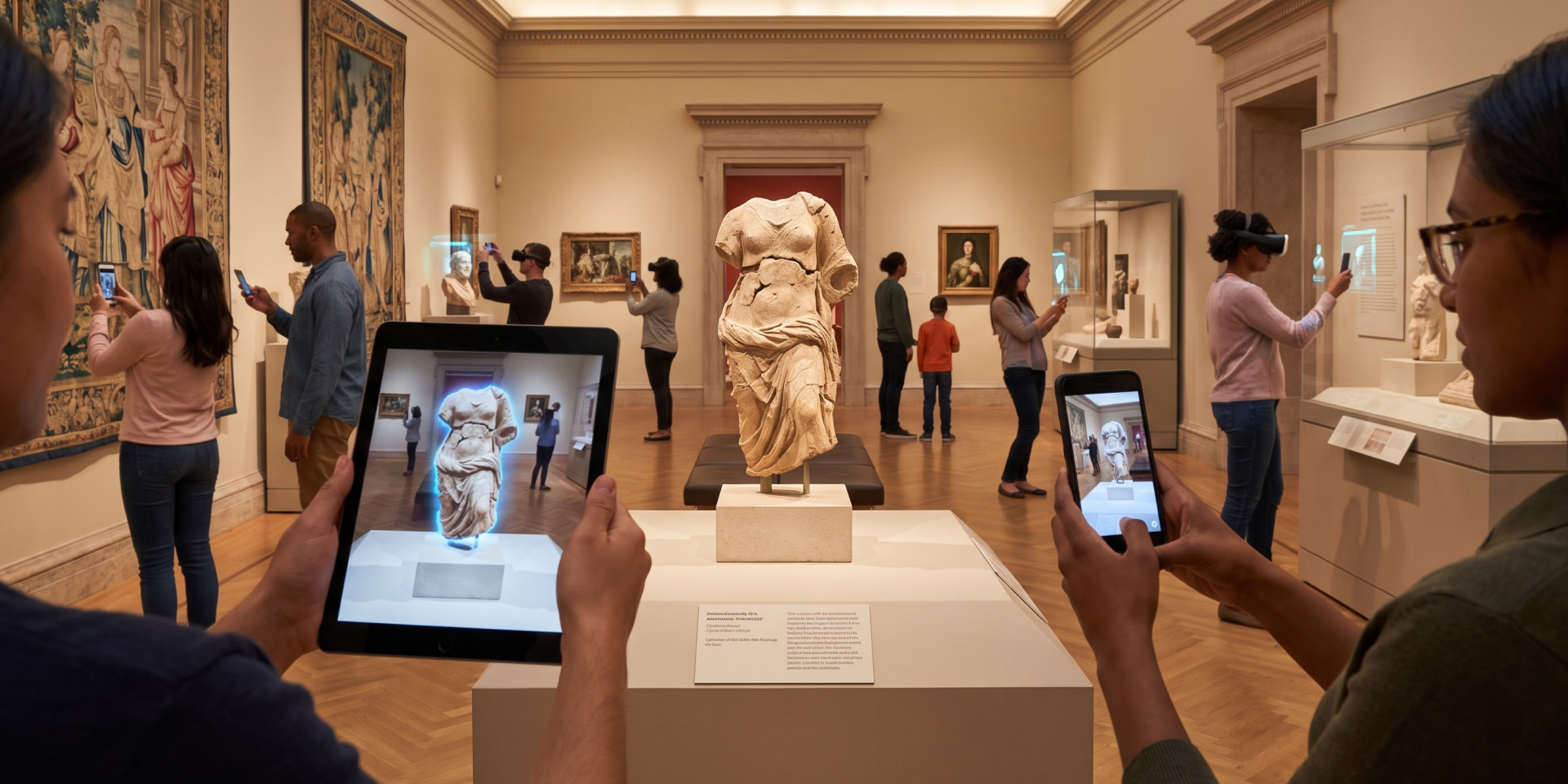
AR in museums is the use of augmented reality to overlay digital content, such as 3D models, animation, audio, and text, onto physical exhibits through a smartphone, tablet, kiosk, or headset. The object stays untouched while the story around it expands.
Augmented reality in museums keeps visitors in front of the real artefact, while virtual reality replaces the room entirely. Our guide to immersive technology compares AR, VR, and mixed reality in detail. For most galleries, AR is the practical choice because it runs on hardware visitors already own.
Why Visitors Walk Past Your Best Objects
The attention problem is measured, not assumed. Researchers who tracked visitors at two major art museums found a mean viewing time of 27.2 seconds per artwork, with a median of 17 seconds. A repeat study fifteen years later recorded 28.6 seconds.
Wall text cannot fix this alone. It is static, printed in one language, and limited by panel space. AR interpretation gives every object a second layer the visitor can open, question, and share. The label states a fact. The layer holds attention.
Five Ways AR Interpretation Works on the Gallery Floor
These are the AR exhibits formats that produce results for cultural institutions:
- Reconstruction in place: A damaged sculpture or a lost structure appears complete through the camera, at true scale, with no physical intervention on the object.
- Layered storytelling: Visitors tap through provenance, trade routes, and maker techniques instead of reading one fixed caption.
- Multilingual access: One AR layer serves every language your audience speaks, at a lower cost than reprinting signage for each exhibition.
- Gamified learning: Scavenger hunts and draw and discover tasks turn a school visit into an activity. Our list of interactive museum exhibits covers twelve formats that pair well with AR.
- Conservation safe interpretation: Nothing touches the artefact. Light levels, humidity, and handling protocols stay exactly as your conservation team requires.
Most of these AR exhibits run on visitor phones, which keeps hardware budgets low and adoption high.
What We Learned Inside CSMVS
Published examples usually come from institutions in Europe or North America. Our experience comes from two respected collections much closer to home, and the lessons apply to any team planning an augmented reality museum programme.
CSMVS, Mumbai: 250 Artefacts, Four Digital Experiences
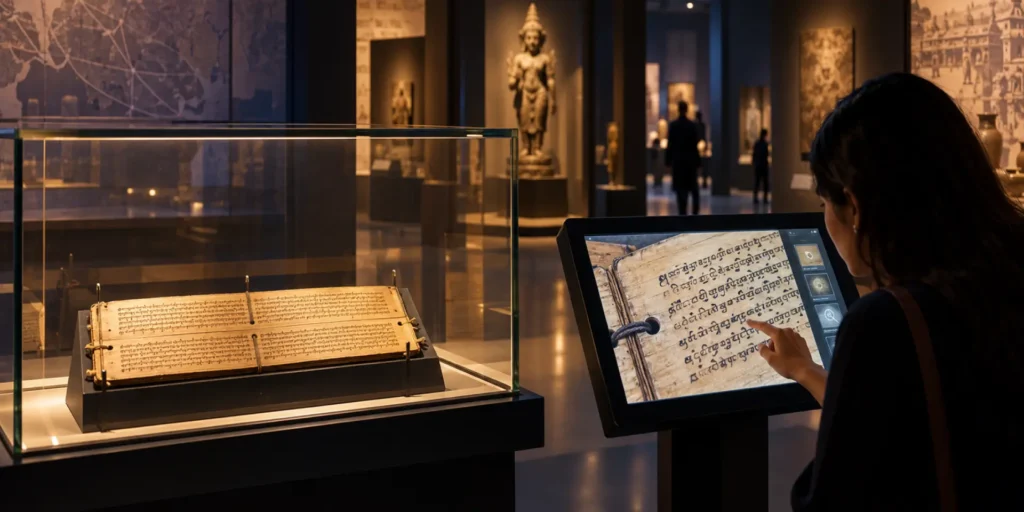
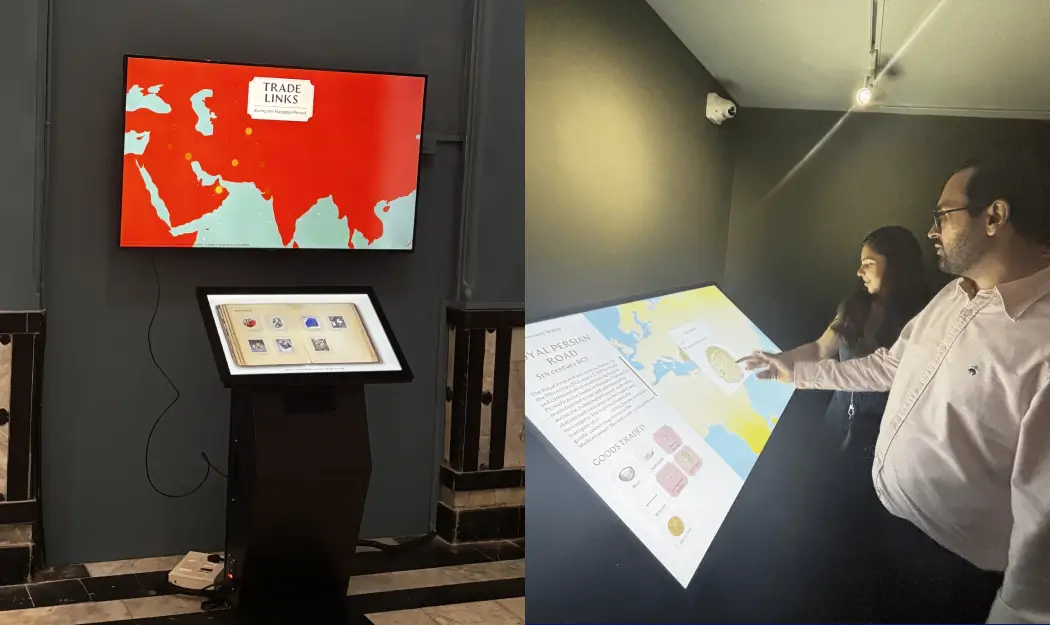
For the Networks of the Past exhibition at Chhatrapati Shivaji Maharaj Vastu Sangrahalaya, we built four interactive experiences around more than 250 artefacts loaned from 14 museums across 6 countries. A tablet based digital twin of the Rosetta Stone let visitors tap each script and read its decipherment story. An interactive LED table connected Silk Road trade flows to the physical objects on display.
Dwell time at these digital touchpoints was measurably higher than at conventional displays, and a digital feedback station replaced paper forms with structured, real time data for curators. The complete build is documented in our CSMVS digital experiences case study.
WebAR, Apps or Headsets: Decide Before You Build
Format choice sets your cost, adoption rate, and maintenance load. Most published guides skip this decision. We put it first in every scoping call:
- WebAR: Opens in the phone browser from a QR code, with no download. Best for temporary AR exhibits and broad audiences. Lowest friction, moderate visual fidelity.
- Native app: Higher graphics quality plus offline support. Best for a permanent augmented reality museum tour with repeat visitors. Requires downloads and ongoing updates.
- Fixed installations: Kiosks, LED tables, and projection surfaces. No visitor device needed, and the museum controls the full experience. Ideal for anchor galleries.
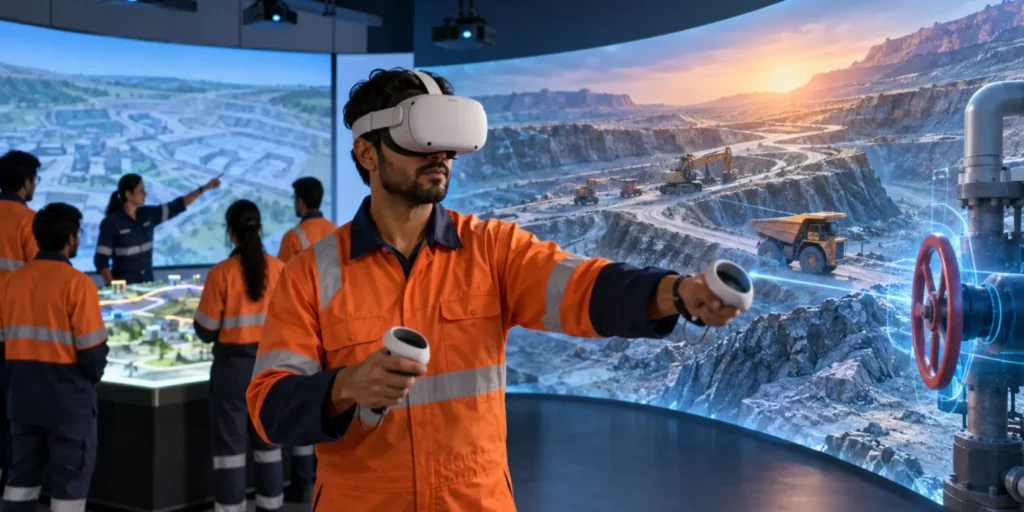
- Headsets: The deepest immersion at the highest cost per user. Suited to ticketed, staffed experiences, not free flow galleries.
A WebAR pilot is usually the fastest and cheapest way to test AR in museums before committing to an app.
A Rollout Plan You Can Defend to Your Board
Treat AR in museums as a staged programme, not a single purchase. This is the sequence we recommend to directors and heritage trusts:
- Pick one gallery: Choose objects with strong stories and steady footfall, then scope a single pilot around them.
- Set a baseline: Record current dwell time and visitor counts before launch so improvement is provable.
- Run the pilot for a full season: Collect usage data and visitor feedback, then remove the friction points you find.
- Scale on evidence: Expand with the pilot numbers in hand. Public grant schemes for museum modernisation now fund digitisation and virtual museum components, which strengthens the proposal in front of any trust.
AR performs best inside a wider visitor strategy. Our playbook on increasing museum footfall with immersive technology covers the audience building side.
The Numbers Behind Augmented Reality Museum Adoption
The evidence base is now strong enough for a board paper:
- Engagement: 84 percent of visitors to an AR exhibit at the Art Gallery of Ontario reported feeling engaged with the art, and 39 percent went back to look at the original paintings again.
- Market growth: The global augmented reality market is projected to grow from USD 125 billion in 2026 to USD 387 billion by 2031, with Asia Pacific growing fastest, according to Mordor Intelligence.
- Tourism demand: AR in travel and tourism is forecast to reach USD 152 billion by 2030, and heritage visitors are a core driver of that spend.
Together, these figures give trustees a defensible basis for approving a pilot budget.
What Comes After the Smartphone Screen
Display smart glasses reached mainstream buyers in 2025 and exceeded demand forecasts, and more than 50 AR hardware makers exhibited at CES 2026. Hands free AR interpretation will follow. Museums that build 3D content and AR exhibits today can reuse those assets on glasses later. The same logic applies to artificial intelligence. Recognition and personalisation models, like those covered in our work on AI in museums, will decide what each visitor sees, and AR will be the display layer they feed.
Planning an AR Programme? Start With a Floor Plan
We design museum interpretation end to end: concept, content, hardware, and post launch analytics. The four experiences we built at CSMVS made more than 250 artefacts contextually accessible and raised dwell time at every digital touchpoint.
If your team is weighing an augmented reality museum programme, share a floor plan and a shortlist of objects with us. We respond within 24 hours with a scoped pilot approach.
Conclusion
Collections do not change. The way people meet them can. AR in museums adds story, language, and evidence over objects that already deserve longer attention. Start with one gallery, measure honestly, and scale what works. The technology is ready, funding supports it, and visitors have shown they respond.
FAQs
What does AR in museums cost?
It depends on format. A single gallery WebAR pilot is the lowest entry point, while native apps and fixed installations cost more and suit permanent programmes. Content production, not hardware, is usually the largest line item. We scope against collection size, visitor volume, and your maintenance capacity.
Do visitors actually use AR exhibits?
Yes, when friction is low. QR access with no forced download performs best. The Art Gallery of Ontario data above shows engagement rates above 80 percent when the experience is easy to open.
Will an augmented reality museum layer distract from the collection?
No. AR interpretation is contactless and reversible, and it directs attention toward the object. Museums also report visitors sharing screens and discussing exhibits together, which supports the social side of a visit.
How do we measure success?
Compare dwell time against your pre launch baseline. Then track sessions per visitor, completion rates, languages used, and repeat visits across the season.