What Is 3D Product Visualization?
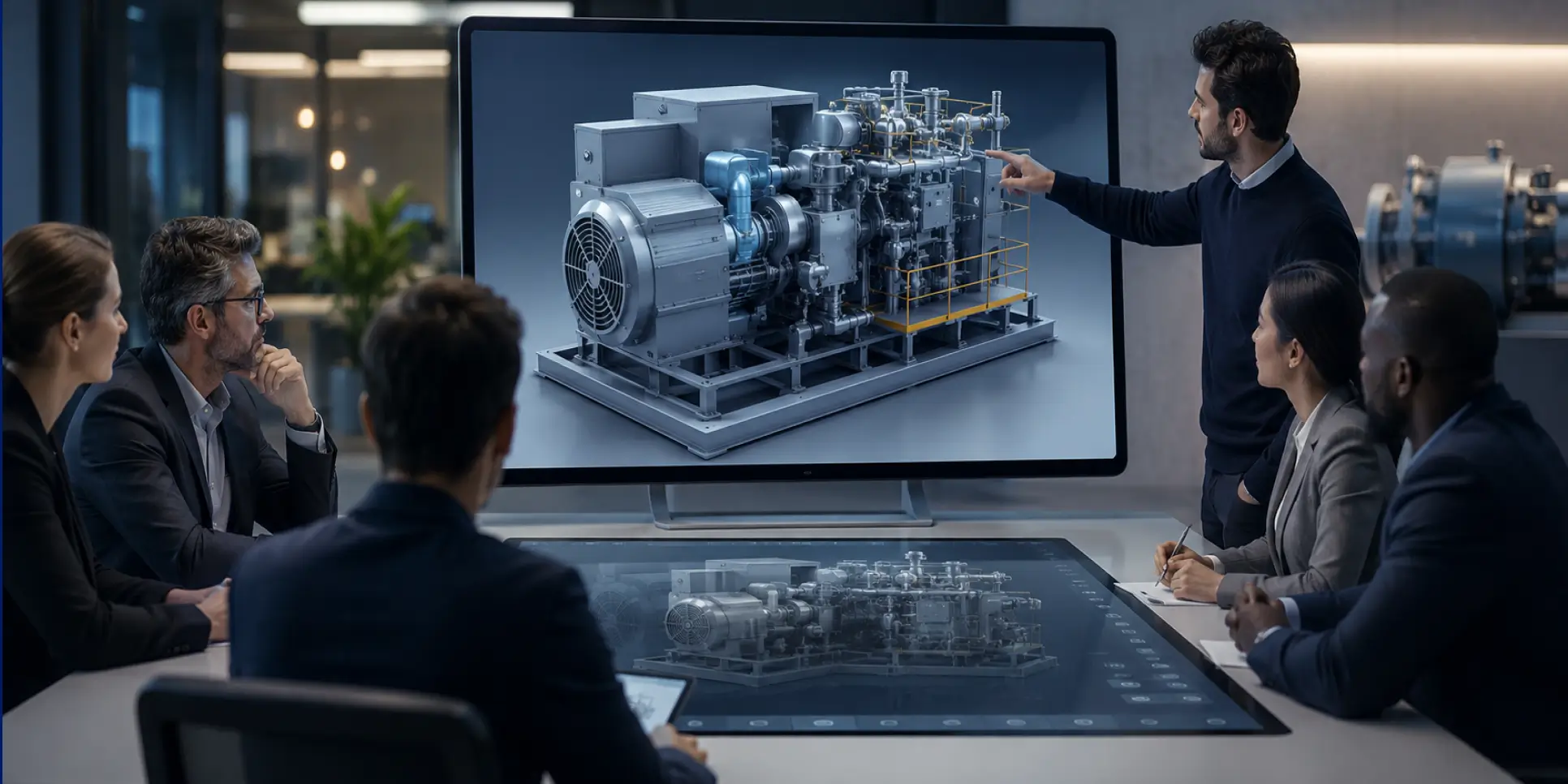
3D product visualization is the process of converting CAD, BIM or design data into interactive, photorealistic 3D models that buyers can rotate, configure and inspect on a screen or inside a physical space. Common formats include web based 3D viewers, an interactive product configurator, augmented reality overlays, holographic tables and immersive demo rooms.
The problem it solves is simple. Brochures and static renders describe a product. Product visualization lets the buyer examine it. That difference matters most in complex categories such as machinery, infrastructure and configurable systems, where one wrong assumption costs months. Our digital product showcases exist for exactly this reason: the buyer controls the camera, so the buyer stops guessing.
Why B2B Deals Stall Before They Close
Long sales cycles rarely come from price. They come from unanswered questions inside the buying group. Research from Gartner on the B2B buying journey shows that buyers spend only 17 percent of the purchase process meeting with suppliers, that a typical buying group includes six to ten stakeholders, and that 77 percent of buyers describe their most recent purchase as complex or difficult.
Read those numbers together and the conclusion is direct. Most of your deal happens in rooms you never enter. The material your champion can share becomes your only voice in those rooms. Spec sheets and slide decks perform poorly in that role. 3D product visualization performs well, because every stakeholder can inspect the product without waiting for your team.
Where 3D Product Visualization Saves Time in the Buying Journey
Buying groups move through recognisable stages, and product visualization compresses each one in a specific way:
- Solution exploration: buyers study your product on your website at their own pace, so first conversations start further along
- Requirements building: engineering and procurement inspect dimensions, materials and variants directly, which shortens specification email threads
- Supplier evaluation: a b2b product demo built on a live model shows the exact configuration under discussion, so comparison meetings need fewer rounds
- Validation: stakeholders in different regions and time zones review the same model asynchronously, without waiting for a joint call
- Consensus creation: the champion presents an experience instead of a document, and alignment that took four sessions happens in one
The final stage is where most enterprise deals die. We examined that failure mode in our analysis of how immersive showroom design solves the B2B consensus problem.
How to Implement 3D Product Visualization in Five Steps
This is the sequence we follow on client engagements. It works for factory equipment, building products, infrastructure and any configurable product line.
Step 1: Find Where Buyers Wait
List every point in your current cycle where a deal pauses for information. Ask your sales team for the three questions they answer most often. Those questions define the first product visualization assets you should build. If reps keep explaining scale, internal components or variant differences, you have found your starting scope. Do not build everything at once.
Step 2: Convert CAD Files Into a Real Time Model
Your engineering data already holds the product truth. Raw CAD and BIM files are too heavy for live rendering, so optimise them into lightweight polygon models with accurate materials and lighting. The output behaves like a digital twin of the product: one accurate master asset that runs smoothly on the web, on kiosks and on holographic hardware.
Step 3: Publish an Interactive Product Configurator
An interactive product configurator lets buyers change modules, materials and options and see the result instantly. Place it on your product pages and connect every session to a quote request, so configuration data reaches your sales team before the first call. Immersive 3D website design built around the configurator also keeps buyers on the page far longer than static galleries.
Step 4: Rebuild the B2B Product Demo Around the Model
Replace slide driven demos. In a b2b product demo, the rep navigates the live model, opens cross sections and answers spatial questions on the spot. After the meeting, send stakeholders the model itself instead of a deck. The b2b product demo then keeps working inside the account while your team is absent.
Step 5: Extend the Model Into Physical Spaces
The same master asset should power your expo stands, visitor centre and executive briefings. Our experience centre design playbook shows how to structure those spaces around decision moments rather than decoration.
McKinsey’s 2026 Global B2B Pulse reports that buyers now use an average of ten channels during a purchase. One consistent 3D model across all of them removes the mixed messages that stall approvals.
How to Measure the Effect on Your Sales Cycle
Deploy the 3D product visualization assets, then track five numbers:
- Time from first demo to decision: compare deal cohorts before and after launch
- Meetings per closed deal: count clarification calls and expect the number to fall
- Stakeholder reach per asset: track unique viewers of the shared model inside each account
- Configurator to quote rate: measure how many interactive product configurator sessions convert into qualified quote requests
- Specification errors: log change orders caused by misunderstood requirements
Tie every product visualization metric to pipeline value, not to impressions. We use the same method described in our breakdown of corporate brand experience centre ROI.
What a Live Deployment Taught Us
For Noida International Airport, we converted resource heavy CAD and BIM files into a real time holographic digital twin of the complete masterplan. Decision makers navigated three view modes, checked construction phases against live data feeds and flagged design errors before physical construction began. The interactive model replaced static presentations entirely, including at the official ground breaking ceremony.
The lesson carries over to any complex sale. When stakeholders can inspect the real thing in three dimensions, validation stops being a bottleneck. If your team keeps re-explaining the same product, tell us what you sell and how long your cycle currently runs. We will map where a 3D model would remove the most waiting time.
The Bottom Line
B2B deals slow down wherever buyers cannot see what they are buying. 3D product visualization removes that blindness at every stage: on the website, inside the b2b product demo, across internal reviews and on the expo floor. Build one accurate model, deploy it everywhere your buyers already are, and measure the weeks it returns to your pipeline.
Frequently Asked Questions
What is 3D product visualization in B2B sales?
It is the use of interactive, photorealistic 3D models, built from CAD or design data, to help buying committees understand, configure and validate a product before purchase. It works on websites, in demo rooms, at expos and in experience centres.
How does 3D product visualization shorten the sales cycle?
It answers buyer questions earlier. Stakeholders inspect the product themselves, so clarification meetings drop, specifications settle faster and internal consensus forms sooner. The saving shows up as fewer meetings per deal and a shorter gap between first demo and final decision.
What is the difference between a b2b product demo and an interactive product configurator?
A b2b product demo is a guided session where a rep presents the live 3D model. An interactive product configurator is self service: the buyer changes options on your website and sees the result instantly. Strong programs use both, built on the same master model.
What data do we need to start a product visualization project?
CAD, BIM or detailed design files, plus material references and a list of the variants buyers ask about most. Heavy files are optimised into lightweight real time models during production.
How much does an interactive product configurator cost?
Cost depends on model complexity, the number of variants, rendering quality and integrations with your quoting or CRM systems. A scoped audit of your product line and sales process produces a reliable estimate before any build begins.