What Is Experience Centre Design?
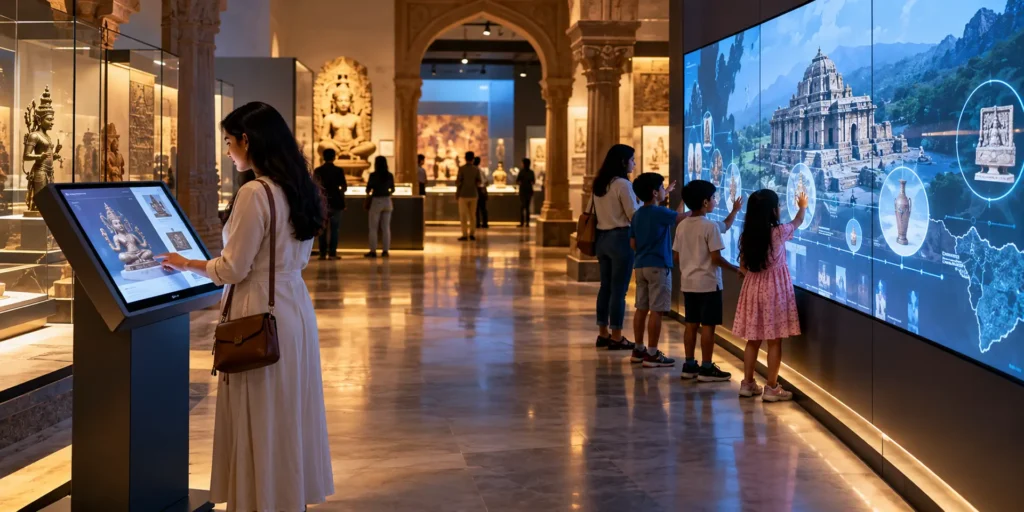
Experience centre design is the planning of a permanent branded space where visitors understand a company through interaction instead of presentation. It combines four disciplines in a single build: narrative planning, spatial layout, interactive technology and measurement.
The thinking has a long record. Harvard Business Review described staged experiences as a distinct economic offering in its 1998 article on the experience economy. B2B brands now apply that logic to enterprise sales. You will also see the American spelling, experience center design; the practice is identical.
One position guides our work: the story comes first, and every square metre must serve it.
Your Buyers Give You 17% of Their Time, so Spend It Well.
Gartner research on the B2B buying journey found that buyers spend only 17 percent of their purchase process meeting suppliers, split across every vendor under review. The same research places six to ten stakeholders inside a typical buying group.
A corporate experience centre answers both problems:
- It concentrates your share of that 17 percent into one well-planned visit.
- It puts the full buying group in one room, so every stakeholder hears the same evidence.
- It replaces claims with demonstration and removes the questions that stall deals.
This is why brand experience centre design has moved from a marketing expense to a sales infrastructure decision in the enterprise budgets we see.
The 7 Phases of Experience Centre Design, From Brief to Opening Day
Most published guides stop at concepts. This is the delivery sequence we follow on our own immersive experience centre projects, with typical durations for a mid-size build.
- Discovery and objectives (2 to 3 weeks). Define audiences, the deal stages the space must influence and the success metrics.
- Narrative architecture (2 to 4 weeks). Write one storyline and one message per zone. Story decisions come before hardware decisions.
- Spatial and zone planning (3 to 4 weeks). Map visitor flow, group capacity and tour lengths of 20, 45 and 90 minutes.
- Technology specification (2 to 3 weeks). Select each installation against the job its zone performs.
- Content production (6 to 10 weeks). Produce films, real-time 3D scenes and data feeds. This runs parallel to the build.
- Fit-out and integration (6 to 8 weeks). Construct, install, calibrate and test under full visitor conditions.
- Launch and measurement. Soft launch, train hosts and switch on CRM logging from the first tour.
A mid-size corporate experience centre takes 16 to 28 weeks end to end.
Inside the Six Zones That Move a Deal Forward
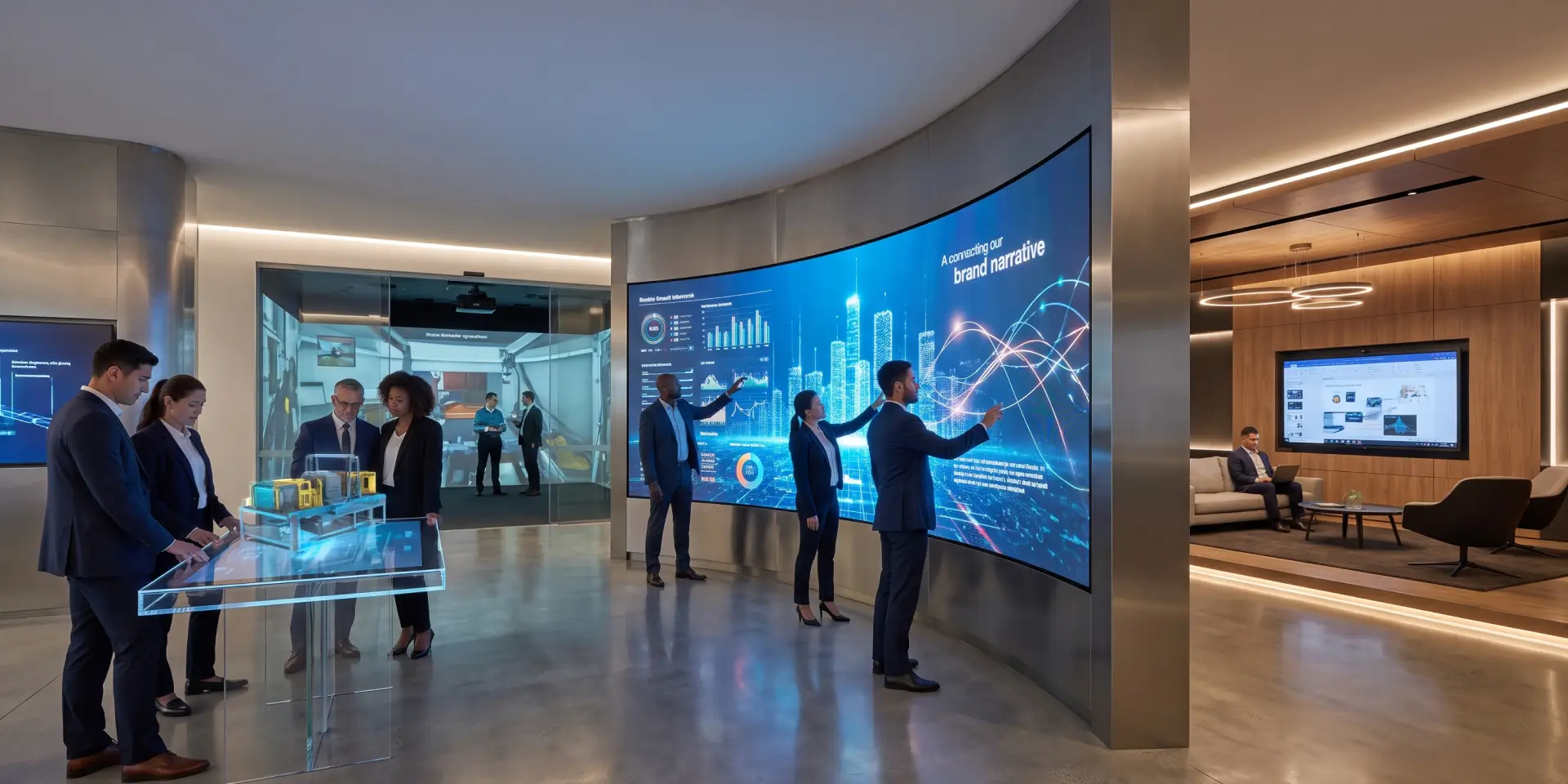
Buying groups rarely agree. We call this the B2B consensus problem, and zoning is how a physical space solves it. Each zone in a corporate experience centre should serve one decision stage.
- Arrival and decompression. Visitors reset. No selling, clear wayfinding, one strong brand cue.
- Brand story zone. Answers who you are and why you exist. Builds early trust.
- Solution demonstration zone. Hands-on product and service proof for technical evaluators.
- Immersive theatre. One shared narrative moment that aligns the full group at once.
- Co-creation room. A working space where your team and the buying group map next steps.
- Hospitality zone. Informal conversation settles remaining doubts here.
Good brand experience centre design gives each stakeholder a zone where their specific concern gets answered. That is the design brief in one sentence.
Technology That Earns Its Place, and Technology That Does Not
Our selection rule is strict. Every installation must do a job a person or a printed panel cannot. In experience centre design, unnecessary screens raise cost and reduce attention.
What earns a place, by job:
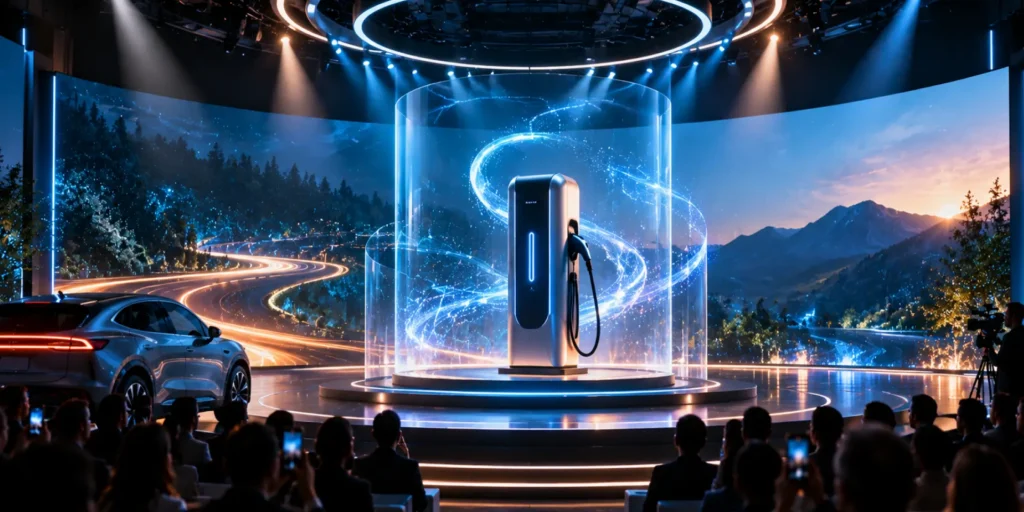
- Projection mapping for stories that need architectural scale.
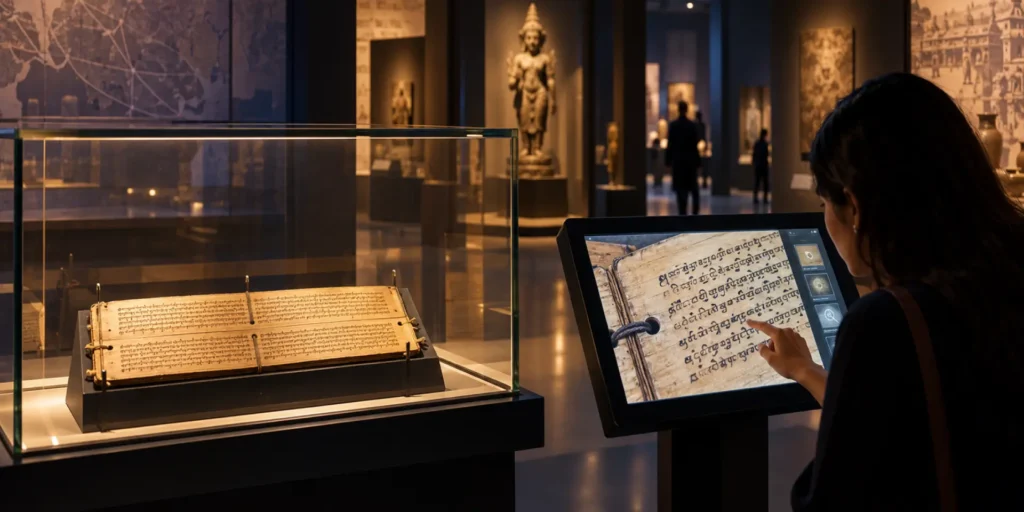
- Touch walls and interactive kiosks for self-directed exploration by technical visitors.
- Real-time 3D and digital twins for products too large, remote or hazardous to show physically.
- VR simulation for training and high-risk walkthroughs, detailed in our guide to VR training use cases and ROI.
- Computer vision analytics for anonymous dwell and flow data.
Skip anything installed for novelty; it stops earning attention within months.
What Does an Experience Centre Cost? The Numbers Nobody Publishes
Public sources say almost nothing useful about costs. Here is how budgets behave across our projects.
Where the money goes:
- Fit-out and fabrication: 25 to 35 percent
- Technology hardware: 20 to 30 percent
- Content production: 25 to 35 percent
- Software and integration: 10 to 15 percent
Plan another 10 to 15 percent of capital each year for content refresh and support. Without it, the centre shows dated material within a year.
Three factors move the total more than floor area: technology density per zone, custom content volume and custom software scope. A single-zone brand suite, a multi-zone corporate experience centre and a flagship destination sit in different budget classes for those reasons.
Prove the Return Before the Board Asks for It
Measurement gets designed in phase one, never as an afterthought. Four numbers make the financial case:
- Pipeline influence rate. The share of closed-won deals that included a centre visit.
- Sales cycle compression on centre-touched opportunities.
- Win rate differential between visited and non-visited accounts.
- Revenue attribution within each reporting quarter.
Log every visit in the CRM from day one. We published the full attribution model in our analysis of the ROI of a corporate brand experience centre, including the vanity metrics to drop.
Six Mistakes That Turn Centres into Empty Rooms
Our brand experience centre design work includes audits of underperforming spaces. The same six faults appear:
- Technology selected before the story is written.
- Launch content with no refresh budget.
- No CRM logging, so nobody can prove impact.
- One fixed tour for every visitor type.
- Untrained hosts reading a script.
- Treating opening day as the end of the project.
Each fault is a planning decision, so each is avoidable. Strong experience centre design closes these gaps on paper, before construction starts.
The Playbook at a Glance
| Decision | Our benchmark |
| Process | 7 phases, 16 to 28 weeks |
| Zones | 6, each mapped to a decision stage |
| Technology | Selected by job, never by novelty |
| Budget shape | Content plus technology: 55 to 65 percent |
| Annual content fund | 10 to 15 percent of capital |
| Measurement | 4 pipeline metrics in the CRM |
The Experience Centre Design Checklist to Complete Before You Brief a Partner
Answer these eight points and your brief beats most we receive:
- One business objective tied to pipeline
- An audience list by role and decision stage
- The deal stages the space must influence
- A shortlisted site with capacity numbers
- A budget range with a four-year content plan
- A CRM measurement plan
- A named internal owner
- Approved content sources and subject experts
What 100+ Projects Taught Us
Everything above comes from delivery: more than 100 immersive projects over ten-plus years with a 92 percent client satisfaction record.
At the Adani Centre of Excellence, we built photorealistic simulations that let stakeholders examine mining operations safely in one room.
For the Varanasi Ropeway VR experience, decision makers rode infrastructure that did not yet exist. That is the standard we hold for demonstration content.
If a corporate experience centre sits on your roadmap, talk to our team and ask for the full planning checklist workbook. We reply within 24 hours.
The Bottom Line
An experience centre is sales infrastructure. Design it around buyer decisions, fund content as an operating line, and measure it in pipeline terms from the first tour. Whether your market writes experience centre design or experience center design, the playbook stays the same: story first, zones with jobs, technology that earns its place, and numbers a board can audit.
Frequently Asked Questions
What is experience center design?
Experience center design is the same discipline under the American spelling: planning a permanent space where visitors learn a brand through interaction. Teams researching experience center design should apply the same process, zones and metrics covered above.
How long does experience centre design take?
A mid-size build runs 16 to 28 weeks across our seven phases. Content production is the usual critical path.
How much does a corporate experience centre cost?
Budgets depend on technology density and content volume. Expect fit-out, hardware, content and software to split roughly 30, 25, 30 and 15 percent, plus an annual content fund.
How is brand experience centre design different from a showroom?
A showroom displays products. Brand experience centre design builds an argument: story, proof, alignment and a measured next step for a full buying committee.