What Is Experiential Marketing? A Clear Definition
Experiential marketing is a strategy where a brand creates a live, interactive experience that people take part in, instead of an advertisement they watch. Visitors touch, test, play or explore. That participation builds memory, trust and purchase intent at levels passive ads rarely reach.
The approach also runs under other names: engagement marketing, live marketing and brand experience marketing. The principle stays the same. The audience becomes a participant.
The idea has an academic base. In 1998, Harvard Business Review described staged experiences as a distinct economic offering in its article on the experience economy. That thesis now shapes retail, travel and events.
Our test with clients is short. If the visitor does something, you are running an experience. If the visitor only sees something, you are running an ad.
Experiential Marketing vs Event Marketing: Where Teams Get It Wrong
The two terms get mixed in almost every briefing call. The difference decides what you build and how you measure it.
- Event marketing promotes a brand at an event through sponsorships, standard booths or stage slots. The event is the vehicle.
- Experiential marketing designs the interaction itself. The experience is the product, whether it sits in an expo hall, a mall atrium or an airport terminal.
- A brand activation is the live execution moment. Experiential marketing campaigns cover the strategy, design, technology and measurement around that moment.
- Engagement marketing is the umbrella term for any tactic that invites participation. Experiential work is its physical, in person form.
One rule from our project reviews helps. If you remove the brand and the experience stops making sense, the design is doing its job.
The Formats Behind High Performing Experiential Marketing Campaigns
Formats vary by objective, venue and budget. These six cover most briefs that reach our event and brand activation services.
Pop Ups and Product Launch Experiences
Temporary spaces built around one product story. They concentrate attention, press and social content into a short window.
Expo Stands and Pavilions
Interactive exhibition stands convert passing footfall into conversations. Touchscreens, live demos and AI driven product systems give sales teams a better opener than a brochure.
Immersive Installations in Malls and Transit Hubs
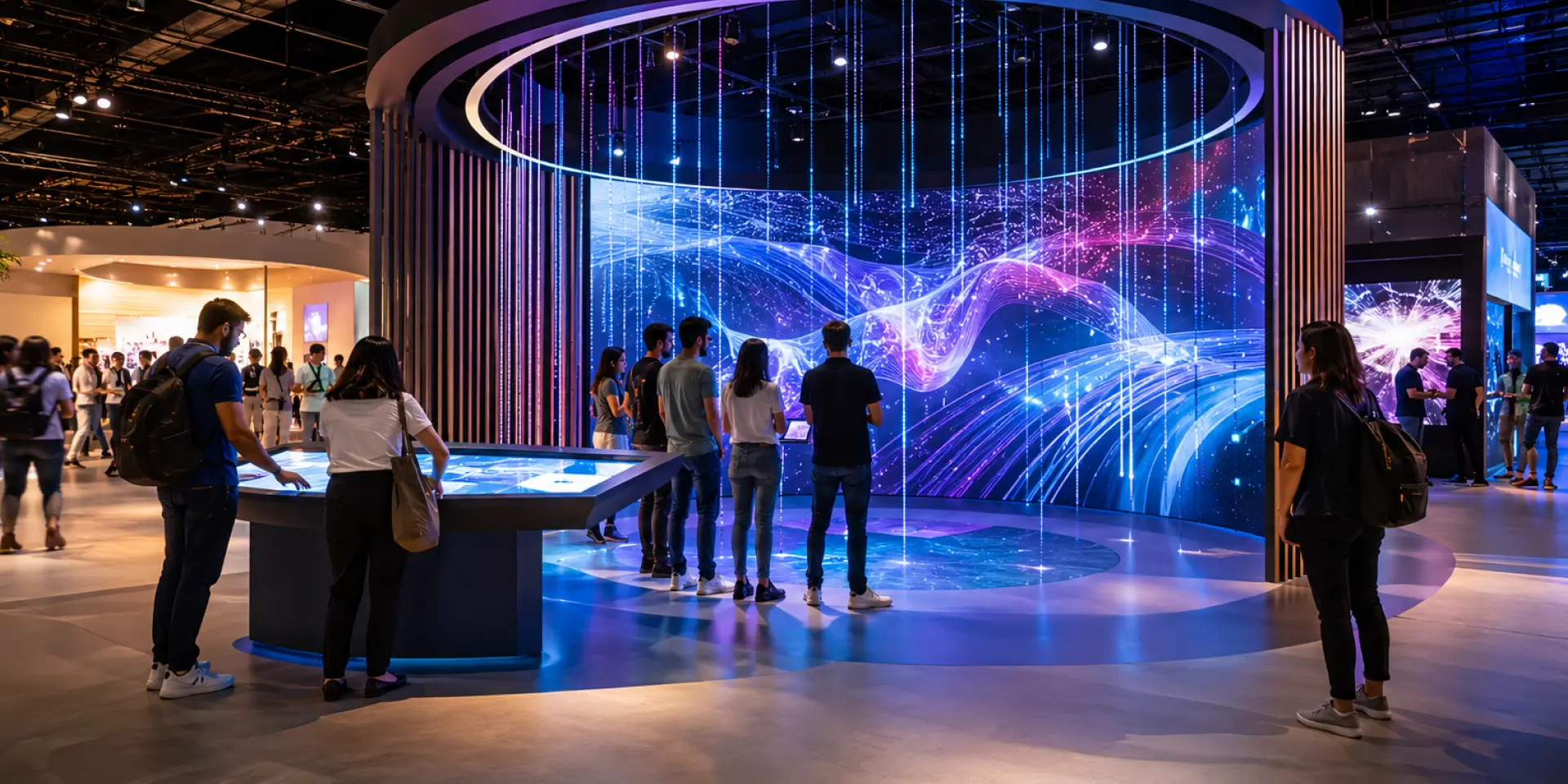
High footfall venues supply the audience. The installation supplies the reason to stop. Gesture reactive displays and 360 degree narrative rooms work well here because visitors need no instructions.
Permanent Brand Experience Centres
A centre acts as an always on activation for buyers, partners and official visitors. Our playbook on experience centre design explains how these spaces influence B2B decisions.
Projection Mapping and Large Format Shows
Projection turns architecture into a display surface. We have documented how projection mapping transforms monuments, and the same technique now anchors city events and venue branding.
VR and Interactive Digital Experiences
Virtual reality lets people walk through something that does not exist yet, from planned infrastructure to future products.
Why Airports, Malls and Expos Became the Biggest Stage for Experiential Marketing
Most guides treat experiential marketing as something brands rent space for. Venue operators sit on the other side of that transaction. Airports, malls and expo centres own the two inputs every campaign needs: footfall and dwell time.
Three conditions make the timing unusual.
- Terminals in one of the world’s fastest growing aviation markets add millions of travellers who wait 60 to 120 minutes.
- Metro connected malls concentrate weekend footfall at a density most media plans cannot buy.
- Expo and pavilion culture gives brands and governments recurring, high intent audiences.
Research supports the format. EventTrack reports that 91 percent of people feel more positive about a brand after taking part in an activation.
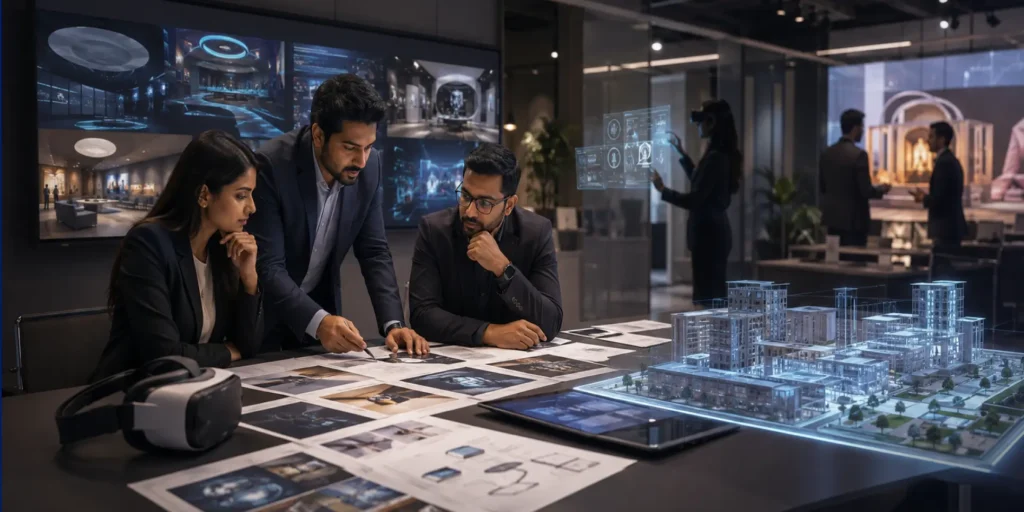
We saw this value directly when we built a holographic digital twin for a new international airport. Visitors and stakeholders explored the full site as an interactive 3D model, and an infrastructure briefing became an experience people asked to repeat.
Cultural venues follow the same logic. For a landmark museum exhibition, our team produced four interactive digital experiences that turned static displays into participation points.
What Brand Experience Marketing Delivers: Five Benefits a CMO Can Defend
Budget owners need outcomes a board will accept. These five hold up.
- Recall. People remember what they did far longer than what they watched. Multi sensory participation encodes stronger memory than exposure.
- Purchase intent. EventTrack found that 98 percent of attendees felt more inclined to buy after a live experience with a product they cared about.
- First party data. Every registration, demo and interaction becomes consented data for your CRM, which matters more as third party tracking fades.
- Earned media. A well designed installation produces photo and video content that visitors distribute for you.
- Loyalty. The same research reports that around 70 percent of attendees who purchase once become repeat customers.
Brand experience marketing also compounds. A visitor who engaged at your expo stand recognises your brand centre at the airport and your pop up at the mall. Each touchpoint reinforces the last.
How Do You Measure Experiential Marketing ROI?
Weak measurement kills more experiential marketing campaigns than weak creative. Fix the framework before the build starts, and track this sequence.
- Footfall: people who entered the zone.
- Engagement rate: the share of footfall that interacted.
- Dwell time: minutes spent inside the experience.
- Interaction depth: completed demos, games or walkthroughs.
- Leads captured: consented contacts and profiles.
- Pipeline influence: revenue attributed over 90 to 180 days.
Then apply a plain formula. ROI equals attributed revenue plus earned media value plus data value, minus total cost, divided by total cost.
Spending trends support the channel. Global spending on experiential marketing reached a record 128 billion dollars in 2024, passing pre pandemic levels, according to PQ Media.
Sensors and computer vision removed the old excuse that live experiences resist measurement. Our activation builds include visitor tracking, dwell time reporting and AI crowd analytics as standard. Our internal targets treat a three minute average dwell and a 60 percent interaction completion rate as the point where lead quality improves.
Permanent installations shift measurement from event metrics to pipeline influence. We covered that model in our analysis of experience centre ROI.
Planning a Campaign? What Working With ViitorX Looks Like
We are ViitorX, an immersive experience studio with more than a decade of work and over 100 delivered projects. Our team holds a 92 percent client satisfaction score across experience centres, expo pavilions, VR programs and public installations.
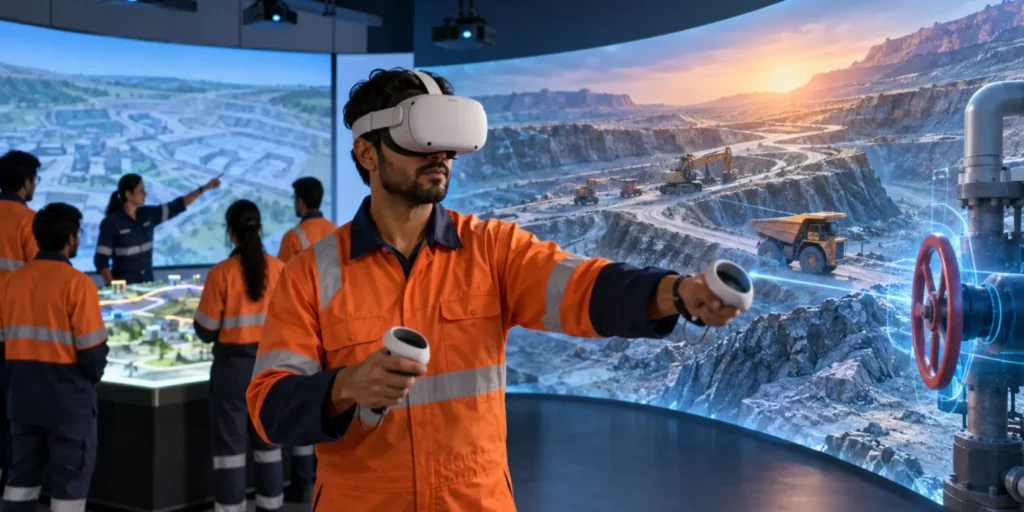
Recent work shows the range. We built a VR walkthrough of a planned urban ropeway so stakeholders could ride the route years before opening. We also delivered an immersive mining training centre where photorealistic simulation replaced high risk physical practice.
If you are scoping experiential marketing campaigns for a launch, an expo or a venue, book a strategy call with our team. Thirty minutes usually maps the format, the budget band and the measurement plan.
The Bottom Line
Experiential marketing works because participation beats exposure. Define the experience first, pick the venue that supplies your audience, and set the measurement plan before the build. Teams that follow this order report ROI with confidence because the data exists from day one.
The brands winning attention in 2026 stopped asking people to watch. They ask people to step in.
FAQs
What is experiential marketing with an example?
Experiential marketing is the practice of building live, interactive brand experiences instead of passive ads. One example: an interactive holographic model of an airport that visitors explore, rather than a printed masterplan.
Is experiential marketing only for large budgets?
No. A single interactive kiosk in a high footfall mall can outperform a large static booth. Budget sets the scale of the experience. Format and placement set its effectiveness.
How is engagement marketing different from experiential marketing?
Engagement marketing covers every tactic that invites participation, including digital ones. Experiential marketing is the physical, in person branch of engagement marketing.
How long do experiential marketing campaigns take to build?
In our production schedules, a kiosk level activation takes three to six weeks. Expo pavilions need eight to twelve weeks. Permanent experience centres run four to nine months, depending on fit out and content volume.
How do venues benefit from brand experience marketing?
Venues gain longer dwell time, new sponsorship revenue and a reason for repeat visits. Malls and airports increasingly treat brand experience marketing zones as anchor attractions rather than rented floor space.