What Motion Graphics Services Actually Cover
Motion graphics services are the design and production of animated visual content for a brand. The work combines graphic design, animation, typography, sound, and 3D rendering to communicate a message in seconds. Typical deliverables include:
- Brand and explainer videos: short films that introduce a product, a company, or an idea
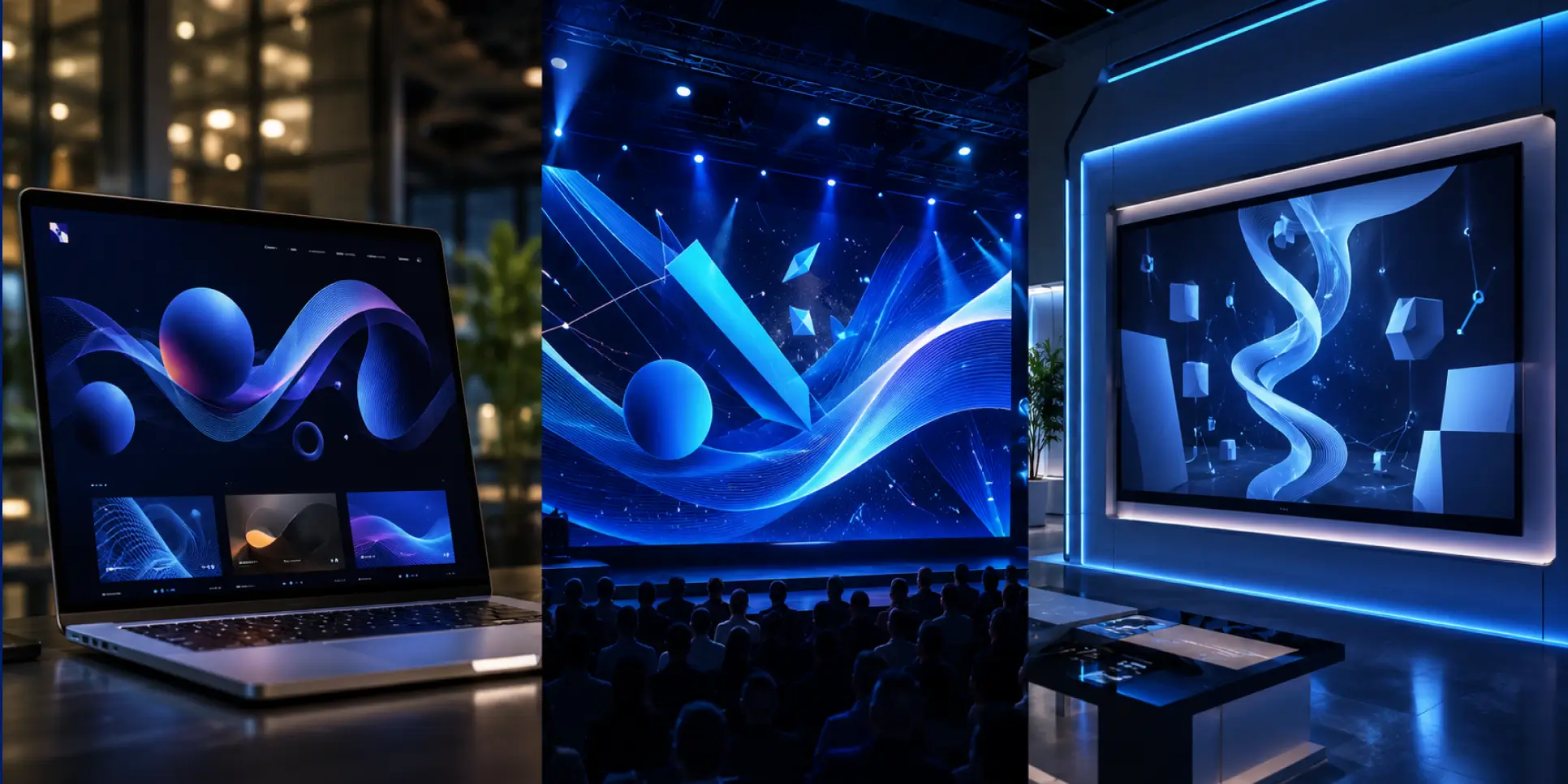
- Web and interface motion: scroll animations, hover states, and animated hero sections
- Event and large-format content: visuals built for LED walls, projection surfaces, and multi-screen setups
- Animated brand assets: logo animations, transitions, lower thirds, and data visualisations
Studios usually split the craft into 2D motion graphics services and 3D motion graphics services. Some providers describe the same work as motion design services or motion graphics design services. The label varies. The job stays constant: make the message move.
Why Static Brand Content Keeps Falling Behind
Attention is the scarcest resource in marketing. Audiences decide within seconds whether content deserves their time. Movement wins those seconds more often than still images, so most businesses now treat animation as standard practice.
Production quality carries weight too. In Wyzowl’s long-running State of Video Marketing survey, 89% of consumers said video quality affects how much they trust a brand. We observe the same behaviour at expos. Visitors read craft as a signal of how a company runs everything else.
This is why motion graphics for brands has shifted from an optional extra to a baseline requirement. Investing in movement buys attention, comprehension, and trust in one line item.
Where Motion Graphics Services Do Their Best Work
Value depends on placement. These are five settings where we have watched motion graphics for brands change audience behaviour.
On the Website, Motion Guides the Eye
A website is the one channel a brand fully controls, and motion decides where visitors look first. Animated hero sections, scroll-triggered storytelling, and product views that respond to the cursor turn a page into a sequence that visitors follow instead of scanning. We shared the evidence in our analysis of 3D website design and brand engagement. Our rule on every build is strict: each animation must direct, explain, or confirm something.
In Campaigns, Brand Motion Graphics Build Recognition
Paid and social campaigns reward consistency. A brand motion graphics system defines how your logo enters, how type moves, and how transitions feel, so every asset looks related even when different teams produce it. Audiences begin to recognise the brand before the logo appears. This is also where motion graphics video production services earn their fee: one concept adapted into many ratios, durations, and languages without the identity drifting.
At Events, Screens React to People
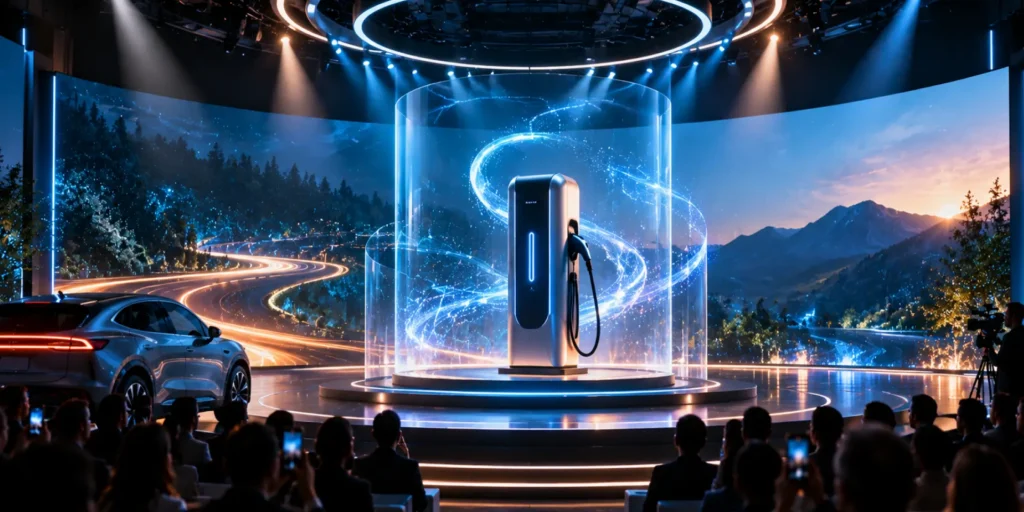
Expos and launches compress months of brand building into a few days, and large-format screens set the energy of the space. In our brand activation work, animated content separates the booths people photograph from the booths people walk past.
For a luxury spirits label, we built a sensor-driven installation where lifting a bottle triggered its origin story in 4K on the screen behind it. Guests queued to try it. That is motion graphics for brands working at room scale.
Inside Experience Centres, Content Holds the Room
Permanent brand spaces succeed or fail on dwell time. Animated guides, projection-mapped walls, and interactive screens give visitors a reason to stay in each zone. For a government forest department, we created a centre where a lifelike animated lion leads visitors through wildlife, seasons, and local culture. We track dwell time on installations like this, and animated storytelling consistently beats static signage.
In Sales, 3D Motion Graphics Services Explain Complex Products
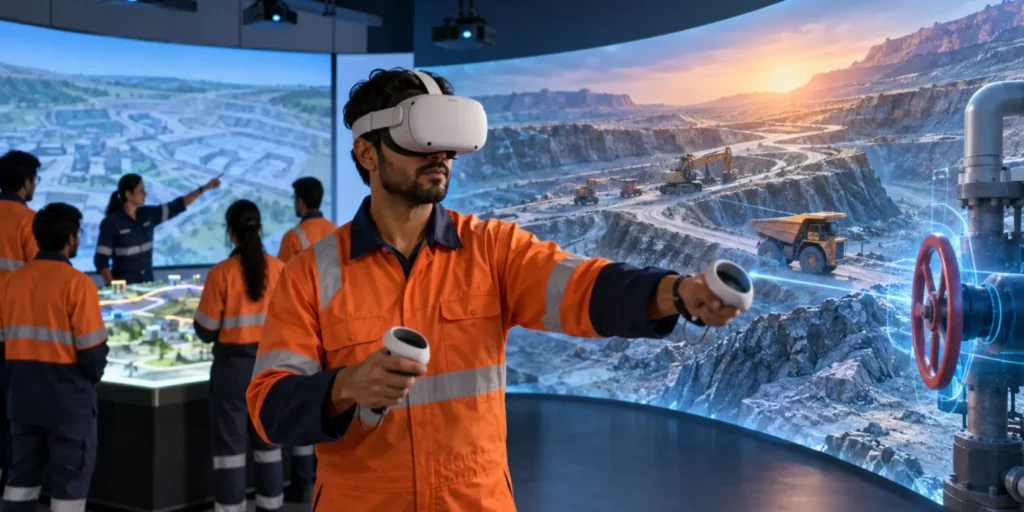
Technical products are hard to sell with photographs. 3D motion graphics services let a prospect look inside a machine, watch a process run, or walk through a facility that has not been built yet. For B2B teams, this is often the fastest payback in motion graphics for brands, because it shortens the explanation phase of every deal.
The Results Brand Leaders Should Expect
Motion is measurable when goals are set upfront. Before any motion graphics services engagement, we agree on which outcomes the work must move:
- Attention: time on page, scroll depth, and video completion rates
- Dwell time: minutes spent per zone in physical spaces, reported from our installations
- Comprehension: fewer repeated questions in sales calls and support conversations
- Conversion support: demo requests, sign-ups, and enquiries linked to the asset
Independent research explains the mechanism. The Nielsen Norman Group notes that human vision is highly sensitive to movement, so purposeful animation directs attention and decorative animation only distracts. Restraint is part of the service.
How to Brief a Motion Graphics Company
A clear brief cuts cost and revisions. We receive briefs every week; the strong ones answer five questions before the first call:
- Define the job of the motion: state what the viewer should understand, feel, or do after watching
- List every placement: website sections, ad ratios, screen resolutions, and LED pixel maps change the production plan
- Hand over the brand system: logo files, fonts, colours, and any existing brand motion graphics rules
- Set one success metric: dwell time, completion rate, or demo requests, agreed before production starts
- Confirm deliverables and rights: formats, source files, revision rounds, and usage terms in writing
A capable motion graphics company will question a weak brief instead of quoting on it. Treat that pushback as a good signal. It predicts how the partner will protect your brand during production.
In-House Team, Freelancer, or Motion Graphics Company?
Each option fits a different workload:
- In-house designer: best for daily social content and quick edits where speed matters most
- Freelancers: right for single assets with a fixed scope, such as one logo animation or one explainer
- A motion graphics company: right when work spans formats, from web animation to event screens, and the brand must stay consistent across all of them
Most clients combine models: routine work stays in-house, and specialist motion graphics services handle launches, activations, and spaces.
The Work Behind Our Point of View
Everything in this article comes from projects we have shipped. As a motion graphics company that also builds the websites and physical spaces the content runs on, ViitorX designs every asset for its final environment and measures the response.
- A forest grown on an LED wall: at a corporate gathering, every guest planted a digital tree from a phone and watched the plantation experience rise in real time on a giant screen
- Four interactive museum exhibits: we turned archival material from a landmark exhibition into digital experiences visitors could touch and explore
The full range of this work, from motion-rich brand websites to holographic digital twins, sits in our portfolio.
If you are planning a launch, a space, or a rebrand, tell us what you have in mind and we will reply within 24 hours.
The Bottom Line
Attention now decides which brands grow. Motion graphics services convert the assets you already own into content that earns attention on websites, in campaigns, at events, and inside physical spaces. The craft is mature, and results are measurable when the brief defines them. Start with one placement, measure it, and expand from there.
FAQs
What is included in motion graphics services?
Motion graphics services typically include concept development, storyboarding, design, animation, sound design, and delivery in every required format. Providers scope work per deliverable, so a project can range from one logo animation to a full multi-screen environment.
How much do motion graphics services cost?
Scope drives the price. Length, 2D versus 3D, the number of formats, and licensing terms matter more than the topic. A short 2D social asset sits at the low end; a 3D product film or room-scale content sits at the top. Request a per-deliverable quote against a fixed format list.
Are motion graphics still relevant now that AI can generate video?
Yes. AI tools speed up parts of production, and we use them where they help. Direction, brand consistency, and placement strategy still decide whether the output performs. Generic movement is now cheap, which raises the value of motion graphics for brands built on a defined system.
How do we keep brand motion graphics consistent across teams?
Document a motion language the same way you document a visual identity. Define timing, easing, logo behaviour, and transition rules, then require every vendor to follow them. A brand motion graphics guideline turns one-off assets into a recognisable system across web, social, and events.