The Experience Centre Meaning, in Plain Terms
The experience centre meaning is straightforward once you remove the jargon. An experience centre is a permanent branded space where visitors interact with a company’s products, services, or ideas through hands-on and sensory displays. An immersive experience centre goes further and uses technology to surround the visitor, so they take part in the story rather than watch it.
The experience centre meaning matters here because the word gets misused. A showroom displays products. A museum preserves and explains. An immersive experience centre is built to engage a business audience and move a decision forward.
How an Immersive Experience Centre Differs from a Showroom
The confusion is common, so here is a clear split. These are the differences we explain to every client at the first meeting.
- Showroom: Shows finished products for viewing and purchase. Passive.
- Museum: Preserves objects and educates a general public.
- Contact or customer experience centre: A support function, often a call centre. A different field entirely.
- Immersive experience centre: Engages a business audience with interactive and immersive content, with the goal of building understanding and trust.
A brand experience centre sits in this last group. It exists to make a company’s value clear to the people who decide whether to buy, partner, or invest.
What Makes an Experience Centre “Immersive”
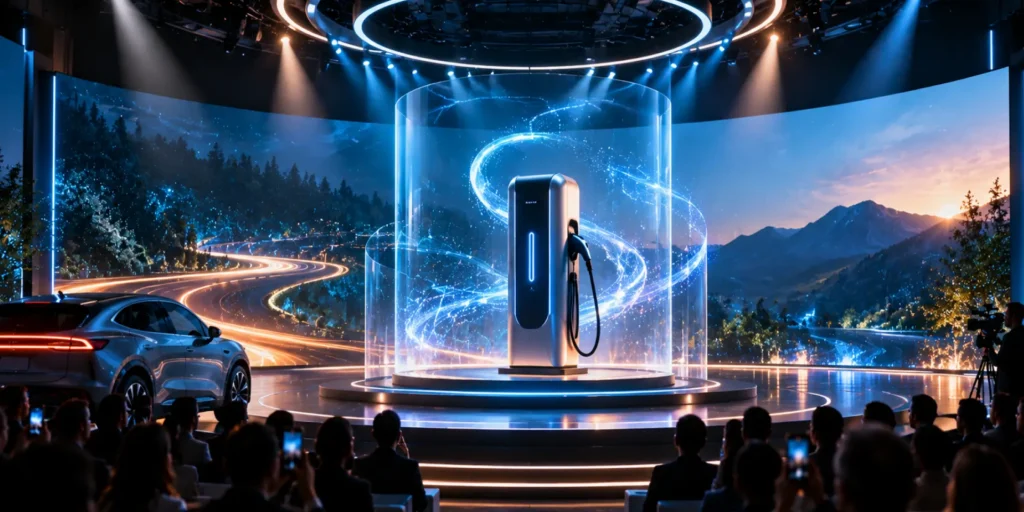
The word immersive points to the technology and the design that pull a visitor in. An ordinary space uses posters and product stands. An immersive experience centre uses tools that respond to the person.
- Interactive touch surfaces and product configurators.
- Projection and LED environments that fill the room.
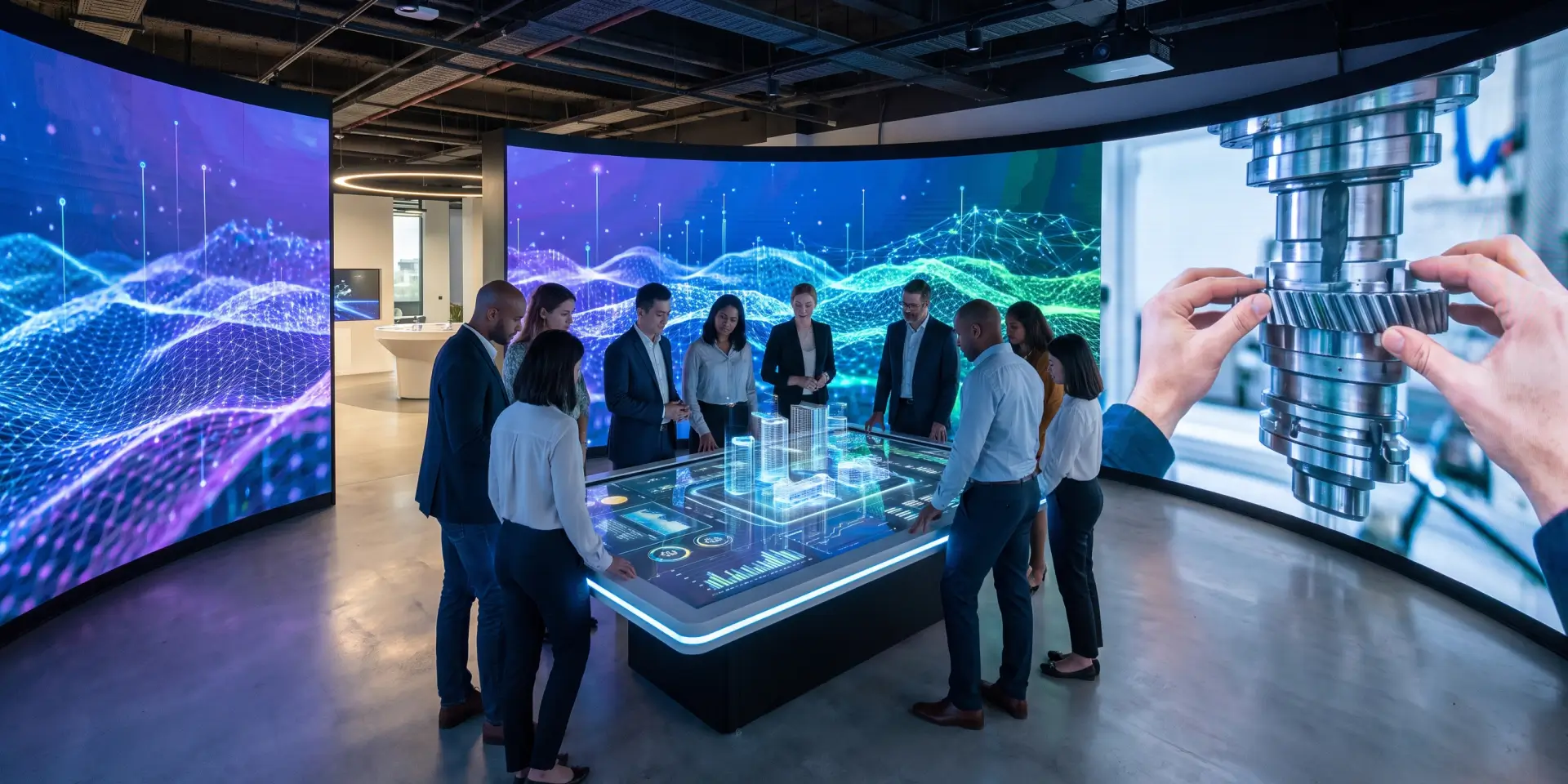
- Holographic displays that show 3D models with no headset.
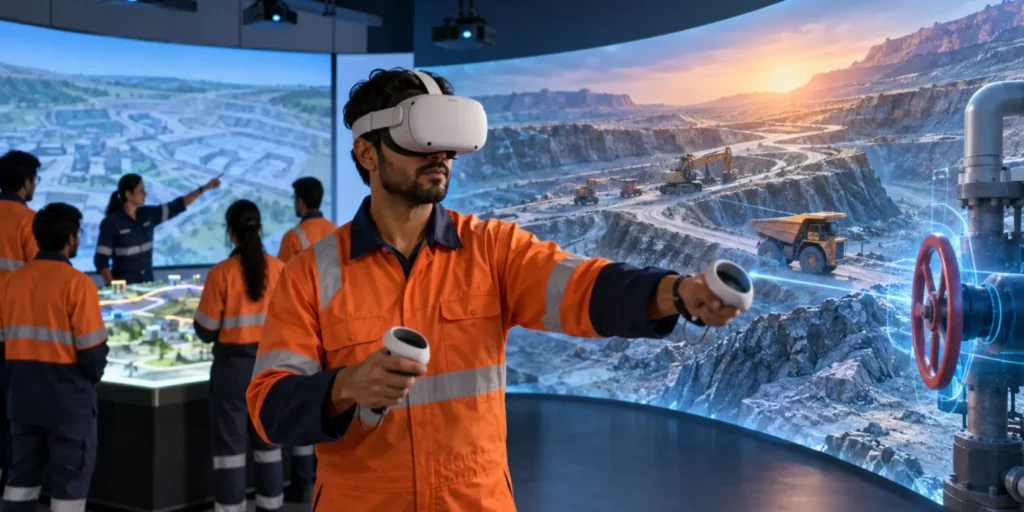
- Virtual reality for scenarios that are hard to stage in real life.
- Digital twins that let visitors explore a large asset up close.
We built a holographic digital twin for a major airport project that let stakeholders walk through the plan before construction. That is the difference an immersive experience centre makes. It turns an abstract idea into something a visitor can see and handle.
The Real Benefits for a B2B Brand
This is the part that matters to a marketing leader. A brand experience centre is a serious investment, so the benefits have to be concrete. Here is what we see across projects.
It Aligns the Whole Buying Committee
Most B2B deals stall because too many people must agree. Gartner research finds that a typical buying group for a complex solution involves six to ten decision-makers, each with their own information. An immersive experience centre gets that group into one room and gives them a shared experience, which shortens the path to a yes.
It Explains Complex Value Fast
Some products are hard to describe in a meeting. An immersive experience centre shows how they work in minutes:
- Technical products become visible and easy to grasp.
- Large or invisible systems can be explored at any scale.
- Data and outcomes are shown, rather than claimed.
It Builds Trust and Credibility
A visit signals that a company is established and serious. Buyers remember an experience far longer than a brochure, and that memory carries into the decision. A brand experience centre gives sales teams a reason to invite a prospect in, which itself moves a relationship forward.
It Engages Partners and Staff
The value is not limited to sales. We see brands use these spaces to train partners, brief investors, and welcome new employees. One immersive experience centre can serve marketing, sales, and internal teams at the same time.
Where a Brand Experience Centre Earns Its Return
An immersive experience centre works hardest when it has a clear job. The common settings we design for include:
- Corporate headquarters that host clients and investors.
- Visitor centres at plants or campuses that explain operations.
- Launch spaces that introduce a new product to the market.
For an industrial client, we created an immersive centre of excellence that lets teams explore operations safely and in detail. The lesson from that project was simple. A space designed around a clear goal returns far more than a space built to look impressive.
What a Good Immersive Experience Centre Needs
A strong result depends on a few decisions made early. Experience has taught us to fix these before any build begins.
- A single goal. Decide whether the space is for sales, training, or brand, because that shapes everything.
- A story, not a showcase. Lead with one clear message.
- The right technology. Match the tools to the audience, rather than adding screens for effect.
- A measurement plan. Track dwell time, engagement, and pipeline influence from day one.
The brands that treat an immersive experience centre as a business tool, with targets and a way to measure them, are the ones that justify the spend. We cover this in more depth in our guide to the ROI of a corporate brand experience centre.
Planning an Immersive Experience Centre?
A brand experience centre works when it starts with the outcome and ends with a number. That is how we approach every project. We have built holographic, interactive, and immersive spaces for large enterprises and public institutions, and each one was designed to hold attention and prove its value to the people who funded it.
If your team is weighing an immersive experience centre for a headquarters, a campus, or a launch, book a consultation with us. We will look at your goals and give you an honest view of what will work and what will not.
The Bottom Line
An immersive experience centre is a practical answer to a real B2B problem: value that is hard to explain and decisions that involve many people. It brings buyers into one space, makes the offer clear, and gives them a reason to trust the brand. Handled well, with a goal and a measurement plan, a brand experience centre becomes one of the most productive assets a company owns. The experience centre meaning, in the end, comes down to this: a place built to turn attention into decisions.
Frequently Asked Questions
What is the experience centre meaning?
The experience centre meaning is a permanent branded space where visitors interact with a company’s products or ideas. An immersive experience centre adds technology that surrounds the visitor, so they take part in the experience instead of watching it.
How is an immersive experience centre different from a showroom?
A showroom displays products for viewing or sale. An immersive experience centre engages a business audience with interactive and immersive content to build understanding and support a buying decision.
What are the benefits of a brand experience centre for B2B?
A brand experience centre aligns large buying committees, explains complex products quickly, builds trust, and engages partners and staff. It gives sales teams a strong reason to bring prospects in.
How do you measure the success of an immersive experience centre?
Track visitor dwell time, interaction levels, return visits, and influence on the sales pipeline. Setting these measures before the build is what proves the value of an immersive experience centre later.