The Immersive Experience Meaning, Minus the Jargon
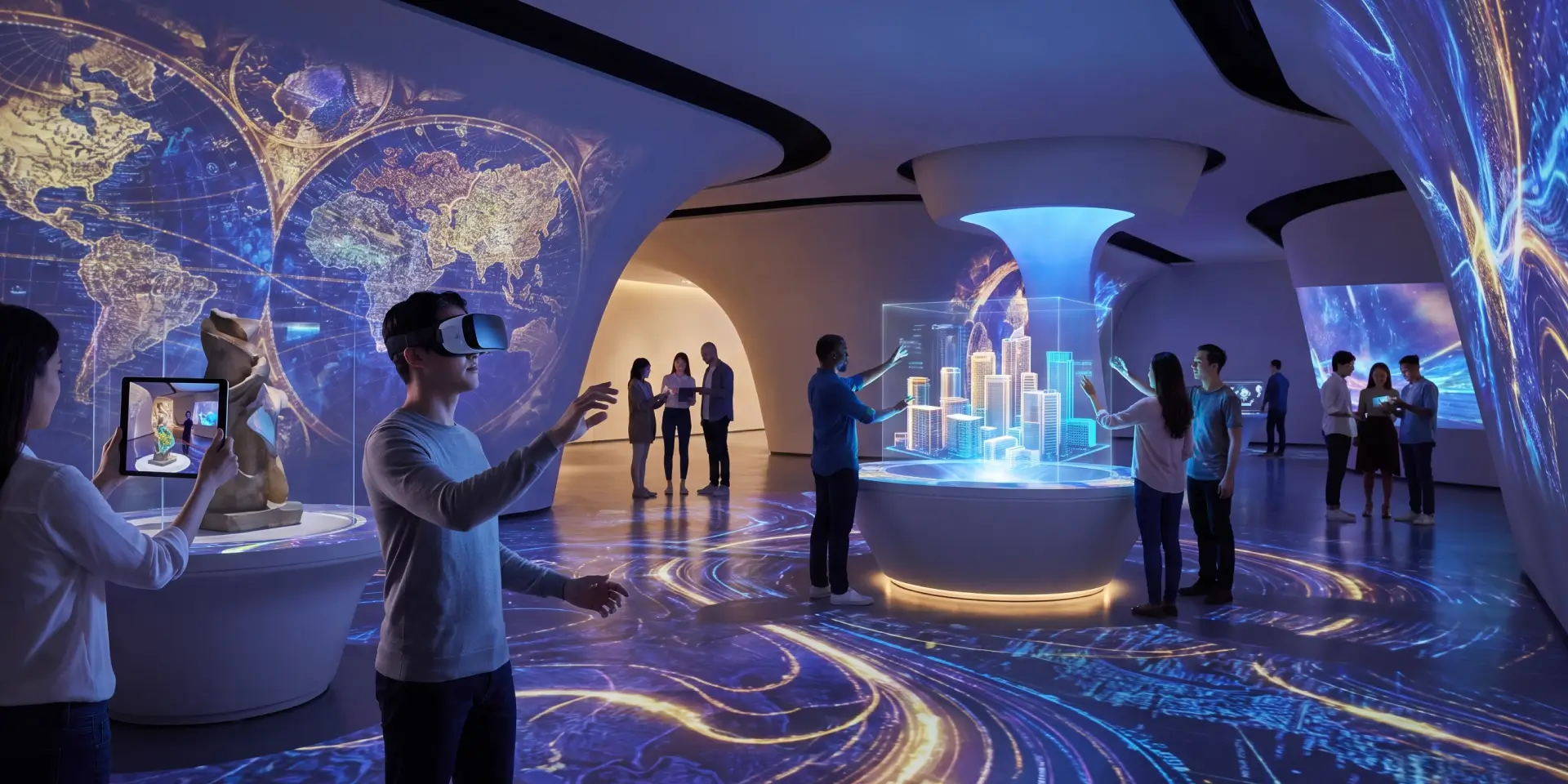
The immersive experience meaning is easy to state without buzzwords. An immersive experience is a physical or digital environment that engages several senses at once, so a person feels present inside a story instead of watching it from outside. Academic research on presence and immersion treats this feeling as a real, measurable state rather than a marketing idea.
Four elements separate an immersive experience from an ordinary display:
- Sensory depth. Sight, sound, and often motion or touch work together.
- The space reacts to what a visitor does.
- A clear story gives the visit a purpose.
- The visitor stops noticing the technology and starts trusting the environment.
Read this way, the immersive experience meaning becomes a practical test. For a business audience, that test decides whether a budget produces engagement or just a photo opportunity.
Why Immersive Experiences Are Suddenly Everywhere
A few years ago, immersive experiences were rare and costly. That has changed. Screen, projection, and headset prices have dropped. Real-time 3D software has matured. Audiences now expect more than a poster on a wall.
Demand in India and the UAE is climbing quickly. Government bodies are funding heritage and tourism destinations that use immersive storytelling to attract visitors. Enterprises are opening visitor centres that make complex products easy to grasp. Event teams want moments that people photograph and share. For decision-makers, the risk has flipped. Standing still now means a competitor opens the more memorable space first. This is why immersive experiences sit as a planned line in serious budgets.
The Main Types of Immersive Experiences, Explained
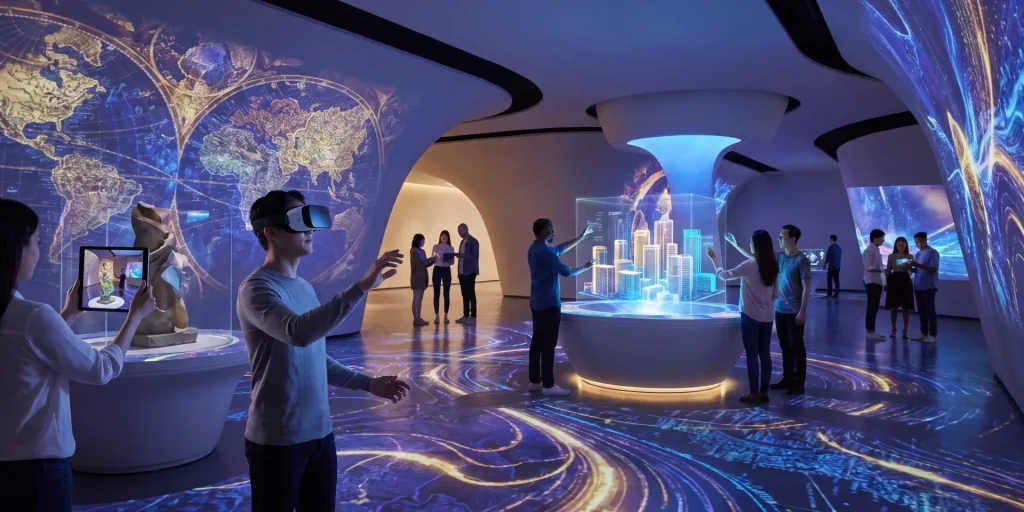
The types of immersive experiences fall into a few clear groups, and most real projects combine two or three of them. These categories sit along a spectrum researchers call the reality-virtuality continuum, which runs from the fully real world to a fully virtual one.
Virtual Reality: The Full Step Inside
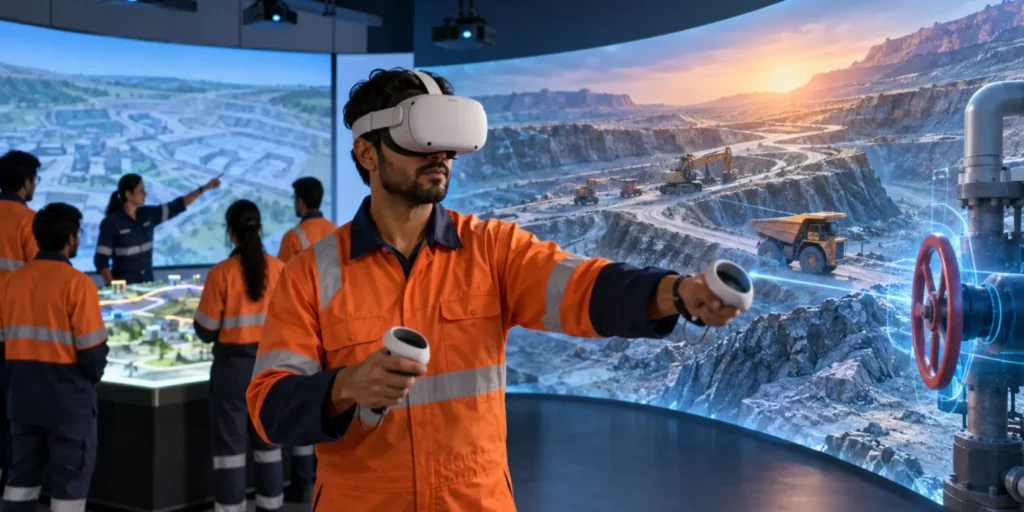
Virtual reality places a person inside a completely digital environment through a headset. It suits training, design review, and any task that is unsafe or expensive to stage in real life. We built a virtual reality training environment for the Adani Centre of Excellence so teams could practise mining operations without real-world risk.
Augmented and Mixed Reality: Digital Layers on the Real World
Augmented reality adds digital content on top of what a person already sees, usually through a phone or a pair of glasses. Mixed reality goes further and lets digital and physical objects react to each other. Museums use these types of immersive experiences to add context to an object without touching the artefact itself.
Projection Mapping: When the Room Becomes the Screen
Projection mapping turns walls, floors, and objects into moving surfaces. Visitors walk through the story rather than sit in front of one screen. It works well for heritage sites, pavilions, and brand centres that want scale without headsets.
Holograms: Depth Without the Headset
Holographic displays show three-dimensional content that a group can view together, with no wearable device. This makes holograms useful for public spaces and planning. We created a holographic digital twin of Noida International Airport that let stakeholders walk through the master plan before construction began.
Web-Based Immersion: The Experience Starts on the Phone
Not every immersive experience needs a physical room. Web-based 3D, real-time rendering, and scroll-led storytelling bring immersion to a browser. For many audiences, the first immersive of a brand now happens on a phone, well before any visit. This lowers the entry cost and widens the reach of an immersive experience.
Real-World Uses: Where Immersive Experiences Work
The real test of any immersive experience is a business result. Across the four industries we focus on, we design for a specific outcome and a way to measure it.
Museums and Culture
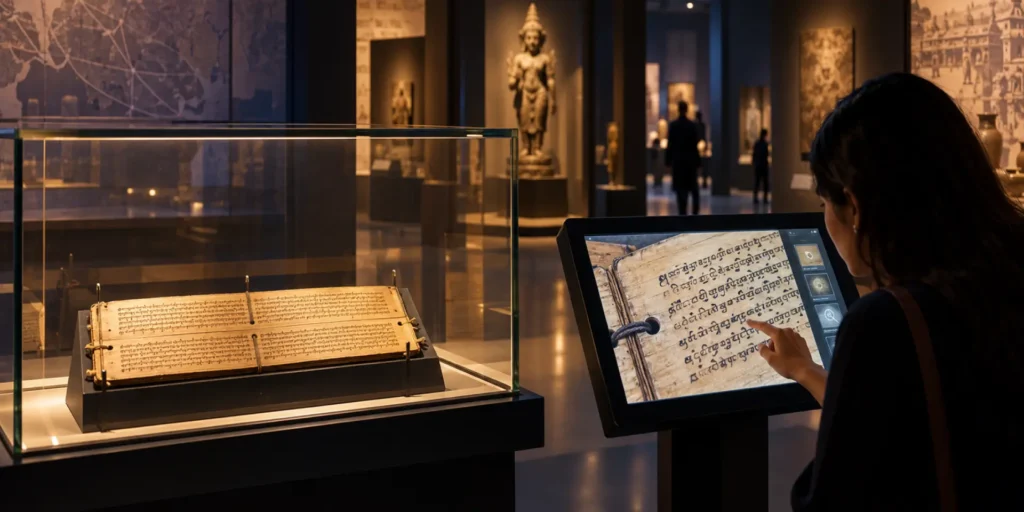
Museums use immersive experiences to make collections feel alive and to reach younger visitors. For the CSMVS museum in Mumbai, we built a set of interactive digital experiences for the ‘Networks of the Past’ exhibition that linked ancient history to modern audiences.
Government, Heritage and Tourism
Public bodies use immersive to turn heritage sites into destinations people travel to see. Our virtual reality experience of the Varanasi ropeway let visitors preview a project before it was built.
Corporate Brand and Visitor Centres
Companies use immersive to explain complex products and to align buying committees. We have written about how immersive showrooms shorten long B2B sales cycles by getting every stakeholder to agree in one room.
Training and Simulation
High-risk industries use immersive to train staff safely. A simulation lets a worker repeat a dangerous task many times with no real consequence, which improves both safety and knowledge retention. It also cuts travel, equipment, and downtime costs.
How to Tell a Strong Immersive Experience from an Expensive One
An impressive launch photo does not prove an immersive experience works. In our projects, we judge quality against a short checklist:
- Story first: The narrative is set before any hardware is bought.
- Real interaction: Visitors change what happens, rather than watch a loop.
- A mobile layer: Part of the visit reaches the phone in the visitor’s hand.
- Honest metrics: Dwell time, interaction depth, and return visits matter more than footfall alone.
These points also help teams measure the return on a brand experience centre and avoid vanity numbers. We recommend agreeing on the metrics before the build starts, because they shape the design.
Planning an Immersive Experience? Start With the Outcome
Teams that succeed with an immersive start with the story and the outcome, then choose the technology. That is how we work at ViitorX. We have delivered holographic planning tools, museum exhibits, virtual reality journeys, and industrial training simulations, and each one began with a clear goal and a way to prove it.
If your team is weighing an immersive experience for a museum, a brand centre, a training programme, or an event, share your brief with our team. We will give you an honest view of what will work and what will not.
The Takeaway for Decision-Makers
An immersive experience is a practical tool for engagement, not a novelty. Once you understand the immersive experience meaning and the main types of immersive, the choice gets simpler: pick the format that fits the story, the audience, and the budget. Start with one project, measure it properly, and scale what works. For leaders in India and the UAE, the opening is clear now, while many competitors still rely on flat screens and printed handouts.
Frequently Asked Questions
What is the immersive experience meaning in simple terms?
The immersive experience’s meaning is an environment, physical or digital, that engages several senses so a person feels present inside a story. The visitor takes part in the experience instead of watching it.
What are the main types of immersive experiences?
The main types of immersive experiences are virtual reality, augmented and mixed reality, projection mapping, holographic displays, and web-based 3D experiences. Most projects combine several of these.
What is an example of an immersive experience?
A common example of an immersive experience is a museum gallery where projection, sound, and interaction let visitors walk through a historical event. VR training simulations and holographic planning models are other examples.
Are immersive experience’s useful for business?
Yes. it help businesses explain complex products, train staff safely, and hold audience attention at events. The key is to measure results such as dwell time and engagement, rather than visitor counts alone.