When the Deal Stalls, the Boardroom Is Usually to Blame
Gartner’s 2025 research on B2B buying groups shows buying committees now span 5 to 16 people across up to four business functions. Forrester’s State of Business Buying 2024 report puts the average number of stakeholders at 13, with 86% of purchases stalling due to internal complexity rather than vendor performance.
Here is what a typical enterprise purchase looks like in 2026:
- 13 stakeholders on average, each with 4 to 5 pieces of independent research
- Buying cycles cross IT, finance, operations, legal, compliance, and executive leadership
- Buyers spend only 17% of their total purchasing time meeting with vendors (Gartner)
- 54% of B2B decision makers say they would switch suppliers due to a poor omnichannel experience (McKinsey, 2024)
Every stakeholder enters the room with a different version of the product in their head. No one is working from the same reference point. That is where the conflict starts.
What an Immersive Showroom Actually Is (and What It Is Not)
An immersive showroom is a purpose-built digital or physical-digital space where B2B buyers explore a product, solution, or service through real-time, interactive experience.
It is not a product brochure. It is not a slide deck. It is not a recorded walkthrough video.
A well-designed immersive showroom includes:
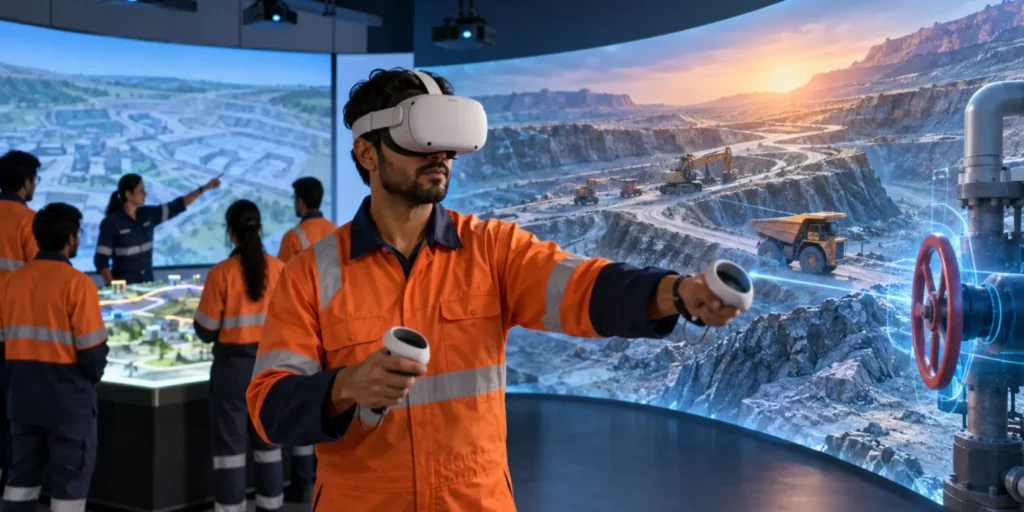
- Real-time 3D product or solution visualization
- Configurable environments where buyers adjust specifications and see the impact immediately
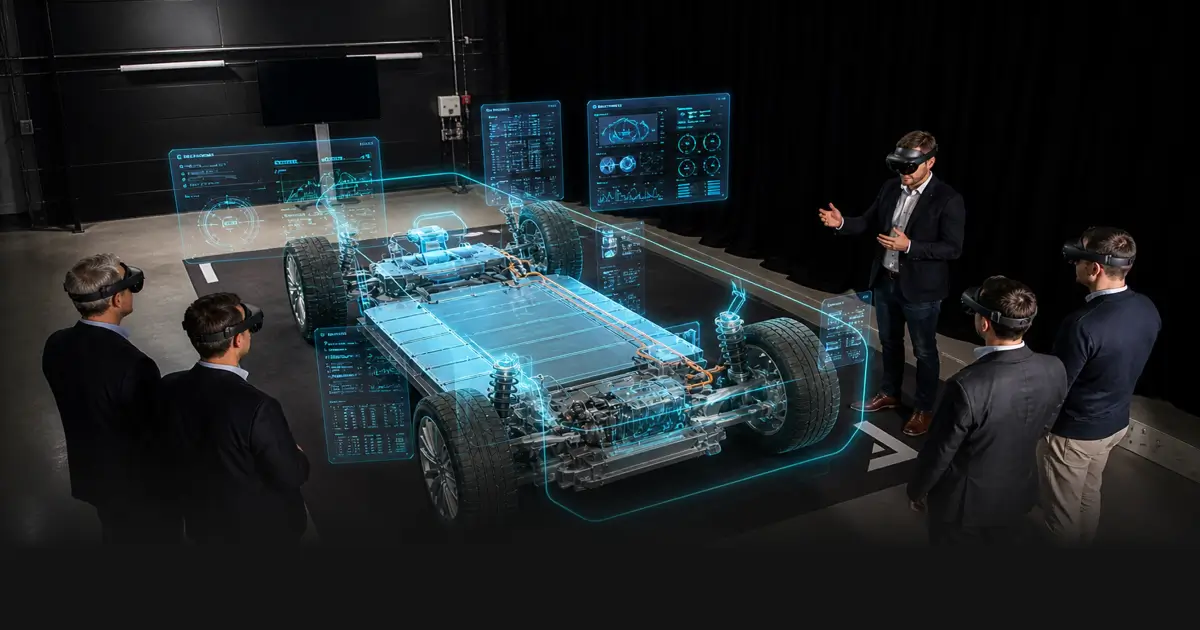
- Multi-user access so all stakeholders explore the same version simultaneously
- Data capture on which features each stakeholder engaged with most
- Guided narratives structured for different seniority levels and business functions
Working with an experienced immersive digital experience team, companies can build these environments across AR, VR, mixed reality, and web-based 3D platforms — without requiring buyers to own or install specialist hardware.
Why Stakeholders Cannot Agree on a PDF but Can Agree on an Experience
The Shared Reference Problem
Each stakeholder in a buying committee carries a different mental model. A CFO reads a financial summary. A CTO reviews a technical specification. An operations head studies an implementation timeline. None of them are looking at the same thing.
A corporate digital brand experience changes that dynamic. When every stakeholder moves through the same 3D virtual space walkthrough corporate environment, they build one shared reference point. Their conversations become more specific. Their objections are easier to resolve.
A PwC study found that VR-based product demonstrations led to a 40% acceleration in the decision-making process. Customers who engage with AR and VR experiences are 40% more likely to make a purchase than those who engage with traditional materials.
What Each Stakeholder Gets from an Immersive Showroom
- CFO / Finance: Sees ROI through scenario-based simulations with real cost configurations
- CTO / IT: Walks through integration architecture inside a live technical environment
- Operations: Reviews workflow implications in a spatial simulation
- Legal / Compliance: Accesses a documented environment with traceable configuration history
- End Users: Tests the solution in a context that mirrors their actual working conditions
- Executive Sponsor: Experiences the full brand narrative and long-term value in one environment
A 3D Virtual Space Walkthrough Corporate Buyers Can Actually Use
From Passive Viewing to Active Exploration
A 3D virtual space walkthrough corporate environment gives buyers agency. They explore rather than observe. This distinction matters when the purchase is complex and the stakes are measured in crores.
In sectors like manufacturing, infrastructure, real estate, and enterprise technology, the product is often too large, too technical, or too abstract to demonstrate in a conference room. A 3D walkthrough places the product inside a photorealistic environment that buyers can navigate, configure, and interrogate.
Capgemini research shows that VR-based virtual walkthroughs reduce site visit costs by up to 45%. For Indian enterprise buyers with decision-making teams spread across Mumbai, Delhi, Bengaluru, and Hyderabad, this is a material advantage.
How a 3D Virtual Walkthrough Fits into a B2B Sales Process
- Pre-meeting access: Stakeholders explore the environment before a formal presentation
- Guided demo: The sales team walks all stakeholders through the same experience at once
- Async review: Individual stakeholders revisit at their own pace and share observations
- Configuration session: The buying team adjusts specifications in real time
- Sign-off documentation: The final configuration is recorded and linked to commercial terms
This sequence compresses what previously required multiple rounds of meetings and revisions into a faster, more transparent process. The 3D immersive technology driving these environments has matured significantly; it now runs on standard enterprise hardware and standard internet connections.
The Corporate Digital Brand Experience Goes Beyond the Product Demo
An immersive showroom is also a corporate digital brand experience. It communicates what the company stands for and why it is a credible choice, alongside what the product does.
In a contested B2B evaluation, brand trust is the deciding factor when technical criteria are comparable. A corporate digital brand experience builds that trust before the formal evaluation begins, at every stakeholder level simultaneously.
Forrester reports that 65% of B2B buyers say in-person brand experience is very important in vendor selection. An immersive digital environment delivers that experience at scale. Deloitte research shows that emotionally engaged buyers are 3 times more likely to recommend and repurchase. The customer experience design principles that govern immersive showrooms are specifically structured to create that engagement consistently.
Why Indian B2B Companies Are Moving on This Now
India’s AR and VR market was valued at $4.84 billion in 2023 and is growing at a CAGR of 38.3% through 2032. The India VR market alone is projected to reach $3.95 billion by 2034.
EY India’s 2025 experiential marketing research confirms that immersive formats are becoming a strategic necessity for Indian brands, not a discretionary activation. The report identifies phygital engagement and immersive formats as direct responses to changing enterprise buyer expectations.
McKinsey data shows that 68% of Indian B2B decision makers believe omnichannel sales is more effective than previous models, one of the highest rates globally. This positions Indian enterprises as natural adopters of immersive showroom environments, which operate as the most integrated omnichannel sales tool available.
The combination of 5G rollout, over 2,000 active AR and VR startups, rising enterprise digital budgets, and distributed buying committees makes the business case for immersive showroom investment in India clear.
What to Look for in an Immersive Showroom Design Company
Before selecting an immersive showroom design company, evaluate the following:
- Multi-platform capability: Can they build across VR, AR, mixed reality, and browser-based 3D environments?
- B2B use case experience: Enterprise sales environments require different design logic than consumer AR
- Stakeholder journey architecture: Does the experience address multiple roles and decision levels?
- Data and analytics output: Does usage data feed back into the sales strategy?
- India-relevant delivery: Does the team understand local infrastructure, connectivity, and enterprise culture?
An AI-powered digital experience capability within the showroom adds further value by personalizing the environment based on the stakeholder’s role, behavior, and engagement history.
ViitorX Has Built These Environments at National Scale
ViitorX is the digital experience studio built specifically to design immersive environments for complex B2B and enterprise audiences across India and globally.
The team built an interactive holographic masterplan for the Noida International Airport, designed to communicate a complex infrastructure vision to multiple stakeholder groups simultaneously. A second project delivered a cultural heritage holographic experience at the G20 summit in Khajuraho, combining spatial storytelling with technical precision for a high-visibility institutional audience.
These projects required the same capabilities that enterprise B2B immersive showrooms demand: multi-stakeholder navigation, real-time configuration, precise spatial representation, and a clear narrative that serves decision makers at different levels of technical depth.
ViitorX’s technology stack covers Meta Quest, Apple Vision Pro, Microsoft HoloLens, ARKit, ARCore, WebGL, and Three.js. The team supports the full delivery cycle, from experience strategy and spatial design to development, deployment, and post-launch analytics.
If your B2B sales cycle is stalling because stakeholders are working from different information, ViitorX builds the shared environment that moves them toward a decision.
Connect with our team to discuss your specific use case.
The B2B Consensus Problem Has a Design Solution
Multi-stakeholder B2B purchases stall when stakeholders carry different mental models into the same decision. An immersive showroom design company resolves this by creating a shared, navigable environment where every stakeholder sees, explores, and responds to the same information.
A 3D virtual space walkthrough corporate solution reduces internal friction, compresses decision timelines, and gives procurement teams a concrete shared reference for their final choice. A corporate digital brand experience builds the trust that moves consideration into commitment.
For Indian B2B companies operating in competitive, multi-geography, multi-stakeholder markets, the data, the technology, and the enterprise appetite are all aligned. The question is no longer whether to invest in immersive showroom design. The question is how quickly it can be deployed.
FAQs
What is an immersive showroom design company?
An immersive showroom design company builds interactive digital environments where B2B buyers explore products or services using AR, VR, or 3D visualization. These environments are structured to help multiple stakeholders engage with the same information at the same time, reducing misalignment and accelerating decisions.
How does a 3D virtual space walkthrough corporate solution help in B2B sales?
A 3D virtual space walkthrough corporate solution gives all members of a buying committee access to the same visual, interactive experience. It creates a shared frame of reference that reduces internal conflict. Research shows it can accelerate decision-making by up to 40%.
Why does a corporate digital brand experience matter for complex B2B purchases?
In a multi-stakeholder purchase, brand trust influences the final decision when technical criteria are comparable. A corporate digital brand experience communicates capabilities and differentiation in a consistent, scalable format that works for all stakeholders.
How is ViitorX positioned as an immersive showroom design company for Indian enterprises?
ViitorX has designed and delivered immersive environments for national infrastructure, government, and cultural institutions in India. The team builds enterprise-grade 3D experiences across AR, VR, mixed reality, and web platforms, with the technical depth and stakeholder design logic that complex B2B sales require.
Is immersive showroom technology viable for Indian B2B companies in 2026?
Yes. India’s AR and VR market is growing at 38.3% CAGR through 2032. With 5G rollout, high smartphone penetration, and rising enterprise digital budgets, the infrastructure for immersive showroom delivery is now available across major Indian cities.